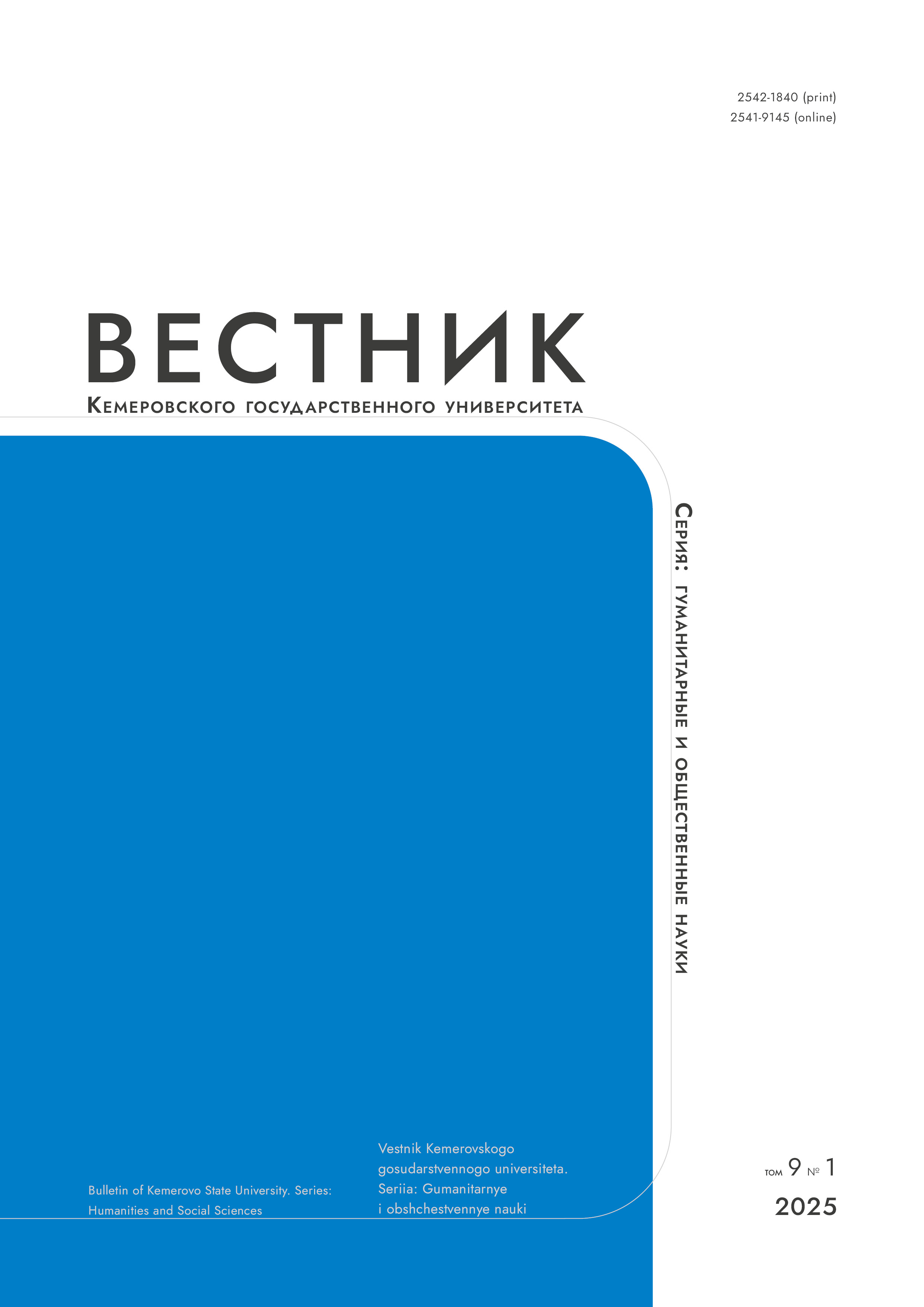
Обложка журнала
Title (English)
BULLETIN OF KEMEROVO STATE UNIVERSITY. SERIES: HUMANITIES AND SOCIAL SCIENCES
Language of publication
Russian, English
ISSN
2542-1840 (print) 2541-9145 (online)
Periodicity (English)

4 times a year

Russian science citation index:
Yes 64190
Russian higher attestation Commission:
Yes K2

Formatting Requirements

  • Submit your manuscript as a .doc or .rtf file, with indentations but no paging or special preformatting settings.
  • Font – Times New Roman, font size – 10, line spacing – 1.0. Do not indent a paragraph with tabulation or series of spaces.
  • The recommended size for a research article is 35,000–40,000 characters, including abstract, keywords, and references; a review article can exceed the limit of 40,000.
  • The title, information about the author(s), abstract, keywords, footnote references, and titles of tables and figures should be available in Russian and English.
  • The title (max. 10-12 words) should be short, informative, and scientific. Make sure your title reflects the subject, topic, and objective of your research.
  • Information about the Author(s):
    • Names: First names precede the last names. In the case of several co-authors, the order depends on the contribution of each author.
    • Affiliations: please use only formal names, no abbreviations. If you believe an acronym is compulsory, mention it in brackets after the full name of your institution.
    • The full name of your affiliation precedes the country and city, separated by a comma.
    • Include your profile link in ORCID.
    • E-mail of the Corresponding Author
  • The abstract (150–250 words) should be original and completely reflect the main results and novelty of the article. The best way to structure your abstract is to let it follow the structure of the article itself: introduction, tasks and objectives, methods, results, and conclusion.
  • Keywords (6–10) identify the subject of the manuscript and facilitate computer-based search. You are free to use separate words or phrases, but not more than three words per phrase.
  • The body of your article should include the following sections:
    • Introduction: Make sure your introduction reflects the objectives of your research. This part gives a brief review of the publications related to the matter and proves its relevance.
    • Methods and Materials: This section describes the experiment or the theoretical background.
    • Results: this paragraph features the experimental or theoretical research results given as text or tables, figures, illustrations, etc. It can be divided into subsections with their own titles.
    • Conclusions: here you briefly summarize the main results of your research. Naturally, the conclusion answers the question posed by the introduction, restates the relevance of the results, contains recommendations, proposes further research, etc.
  • Illustrative material:
    • place the tables and figures inside the body of your article;
    • provide each table or figure with a link in the text;
    • enclose figures made in MS Office as separate .xls, .vsd, or doc files;
    • enclose scanned images and photographs as separate .tif, .jpg, or .png files with a resolution of > 300 dpi;
    • tables are editable text, not images.
  • Additional information
    • Conflict of Interests: this section indicates a real or potential conflict of interests. If there is no conflict of interests, you should write that “the author declares that there is no conflict of interests regarding the publication of this article”. Please make sure you have informed the Editor in advance about any kind of potential conflict of interests. Should the Editor reveal it during the initial check-up, your manuscript can be rejected.
    • Authorship and Contribution: specify the contribution of each author; CRediT may help you to define their roles in the project. 
      • In determining the authorship and contributorship, the editorial office follows the authorship criteria:

        1. Substantial contributions to the conception or design of the work; or the acquisition, analysis, or interpretation of data for the work; AND.
        2. Drafting the work or revising it critically for important intellectual content; AND
        3. Final approval of the version to be published; AND
        4. Agreement to be accountable for all aspects of the work in ensuring that questions related to the accuracy or integrity of any part of the work are appropriately investigated and resolved.
    • Acknowledgments: This section is optional and contains an expression of gratitude to those who contributed to the research.
    • Funding: indicate the organization that supported your research and the publication of this article. Remember that by failing to indicate funding source you may cause a conflict of interests.
  • References: 25–40 for an original research article, 80 for a review. It is a mandatory structural part, which reflects the scientific coverage of the topic and allows you to verify the reliability of the data used in the study. The list of references allows you to recognize and use the ideas of other authors, avoid accusations of plagiarism as well as demonstrate the scale and depth of research by quoting the works of other authors and their previous publications. References to the latest publications and foreign literature can highlight the relevance of a scientific publication.  
    • The editorial office does not accept for publication manuscripts without a list of references.
    • Include in the list of references only the sources used to write the article.
    • References to unpublished works, state documents (decrees, laws, etc.), historical documents, newspaper articles, Internet sources without authorship (forums, blogs, etc.), examples from fiction, encyclopedias, dictionaries, etc. are given as footnotes.
    • References are given in square brackets, numbered (starting from the first number).
    • Place the list of references after the body of the article in the order of mention in the text, preceded by the word References.
    • Instead of including dissertations, abstracts of dissertations, educational and methodological manuals, it is better to reference articles from scientific journals, conference materials, monographs, etc., published by the same author.
    • Include 7–10 sources published in the last 5 years.
    • Limit self-citation to 10 % of references from the total number of sources. Use of self-citation should be justified.
    • Provide the description of the sources in accordance with Russian National Standard (GOST 7.05-2008 Bibliographic reference. General requirements and rules of compilation). The description of the source in Latin is based on the Chicago style citation. Replace slashes and hyphens used in GOST with commas and dots.
    • The bibliographic description of the publication includes:
      • the last name and initials of every author (regardless of their number),
      • the full title of the work,
      • title of the book or journal (if specified),
      • city, publisher's name, year of publication,
      • volume (for multi-volume publications); volume and issue (for periodicals),
      • for articles – the numbers of the first and last page; for monographs – the total number of pages.
    • If the source has DOI, add it to the bibliographical description.
    • When referring to a part of a book or collection (article, chapter, section, etc.), indicate its first and last pages in the list of references.
    • Provide a translation or transliteration of the source in square brackets after the Russian description.
    • Transliteration of the Russian authors’ last name should match the one provided in their other publications (in foreign language) or in their profiles (ORCID, Scopus). If there is no such information, use transliteration according to the LC standard (Library of Congress).
    • Do not transliterate the names of foreign authors, instead use their name as it is originally written (for example, J. Austin – J. Austen, not Dzh. Ostin).
    • If the title of publication is written in alphabet, other than Latin, translate it into English. If authors of the source material already provided a translation, use the author’s version translation. You can find this information on the website of a particular journal or in digital scientific library (eLIBRARY.RU).
    • Provide the names of journals written in alphabet, other than Latin, according to how the journals prefer to be quoted. If the journal has no such information, then use transliteration according to the LC standard. Italicize the name of the journal.
    • If the source text written in alphabet, other than Latin, then the language of the publication is indicated in parentheses at the end of the description, for example (In Russ.), (In Jap.), (In Ukr.), etc.


  1. Instruction for registration profile ORCID.
  2. Examples of the description of the cited publications.
  3. Systems of text translation into Latin TranslitterationTranslit!
  4. Systems of automatic generation of bibliographic description: BibmeCitefastCitation Creatio

Compliance requirements of publication ethics apply to all members of the publishing process – authors, editors, reviewers, and the publisher of the journal. The editorial board monitors compliance with the ethics requirements based on the manuals prepared by specialized organizations, and publishers, as well as the Association of Science Editors and Publishers (ASEP). The main standards relied on by the journal Bulletin of Kemerovo State University are those developed by the Committee on Publication Ethics (United Kingdom), by the publisher Elsevier (Netherlands), and the Declaration "Ethical Principles of Scientific Publications" (adopted by ASEP). 

The responsibility of editors

  1. The editors are personally and independently responsible for the content of the materials published.
  2. The editors make fair and objective decisions, regardless of any commercial interest and provide a fair and efficient process for the independent review.
  3. The editors evaluate manuscripts' intellectual content, adhering to the principle of equality of Authors.
  4. The editors do not work with articles for which they have a conflict of interest.
  5. The editors resolve conflict situations arising during the editorial process.
  6. The editors of the journal publish information concerning corrections, rebuttals, and review articles in case the need arises.
  7. The editors do publish the final version of the article  only after agreement with the authors.
  8. The editors correctly conduct correspondence with authors and reviewers, timely respond to letters.

The responsibility of the reviewers

  1. The reviewer evaluates his or her own availability before the examination of the manuscript and accepts materials for review only if the reviewer is able to allow for sufficient time as to ensure the quality his or her work.
  2. The reviewer notifies the editorial staff of any conflict of interest (if one exists) before the start of the review of the article.
  3. The reviewer does not send information about the article and or any of the data contained within the article to any third party, and does not use the information obtained from the article for any personal and or commercial purposes.
  4. The reviewer draws conclusions about the quality of the article based on objective data, without expressing a personal relationship to the author.
  5. The reviewer uses only proper and appropriate language and explanations in respect to the articles, avoiding any personal remarks.
  6. The reviewer correctly conduct correspondence with editors, timely respond to letters.

The responsibility of the authors

  1. The author is responsible for the accuracy of the data presented in the article, and guarantees the originality of its content.
  2. The author notifies the editors if the article is based on previously published materials.
  3. The author does not submit the same article to different journals for review.
  4. All co-authors consent to the submission of their articles to the journal.
  5. The author informs the editorial staff of a potential conflict of interest.
  6. The author correctly cites his or her previous works and others' works, avoids self-plagiarism and an artificial increase in the volume of publications.
  7. The list of authors included only individuals who have made significant contributions to the research.
  8. If necessary, the authors either adjust the data presented in the article, or refute them.
  9. The author, who is acting as the contact with journal, informs all other co-authors of all changes and suggestions from the editorial staff, and does not make decisions regarding the article alone without the written consent of all co-authors.
  10. The author correctly conduct correspondence with editors, timely respond to letters.

The responsibility of the publisher

  1. Publisher supports scientific communications, finances this process, is responsible for adhering to the principles and procedures that contribute to the ethical duties of all participants in the editorial and publishing process.
  2. The publisher does not affect the editorial policy of the journal.
  3. The publisher provides legal support to the journal if necessary.
  4. The publisher provides for the timely release of next issues of the journal.
  1. General

    • We accept manuscripts of original articles and reviews in Russian and English.

    • The authors guarantee that:

      • they own the exclusive copyright for the manuscript they submit;

      • they publication will not infringe a third party’s copyright;

      • the manuscript has never been published;

      • they did not submit it to any other journal;

      • the list of authors includes only those who contributed to the research.

      • they agree with the Publication Ethics of the journal.

  2. Submission procedure

    • E-mail us your manusc, additional materials, and accompanying documents (Consent to Personal Data Processing, Consent to the Dissemination of Personal Data, Cross-Border Transfer of Personal Data) or upload them as separate files using your personal account on our website.

    • If you previously submitted this article to some other journal but it was not accepted for publication, please inform us in your letter lest we should accidentally reject your manuscript after the initial check-up.

    • Two manuscripts submitted by the same author cannot be published in one issue or in two consecutive issues.

    • Please remember that the Editors do not enter into correspondence with Authors to discuss the content, methods, or formatting of the articles submitted. Neither do we improve the scientific and methodological quality of the paper. 

  3. Registration and Initial Check-Up

    • The registration and initial check-up stage normally take five days. We will e-mail you about the current status of your manuscript. If you did not get a letter from us within five days, it means that we did not receive your submission due to some technical problem. Please send your letter again or call +7(3842)55-87-61.

    • The Editor checks all submitted manuscripts for compliance with the profile of The Bulletin, Publishing Ethics (plagiarism, doubling, etc.), and formatting requirements (text volume, structure, number of keywords, abstract volume, references, in-text references, information about the Authors, etc.)

    • If your article is beyond the scope of the Bulletin or violates our Publishing Ethics, you will receive a substantiated rejection letter.

    • If the submitted article does not meet our formatting requirements, it will be returned to you for revision and improvement. 

    • Should you fail to e-mail us the improved version within 10 days, your next attempt will automatically be classified as a new submission.

    • Please visit our website to find out more about formatting requirements.

  4. If the manuscript passes the initial check-up, it will be peer-reviewed by two experts in accordance with the rules established by the Editorial. The review process is double-blind to provide anonymity for both authors and reviewers.

  5. Admission Procedure

    • After your manuscript has been approved for publication, the Editor will inform you by e-mail and state the approximate publication date.

    • We do not guarantee that your manuscript will be published in the next issue: the review procedure usually takes some time.

    • We can provide you with an official letter that your manuscript has been accepted for publication. Do not hesitate to request a confirmation letter, if needed.

    • publishing license agreement is signed by the Author(s) after the article is recommended for publication.

    • Papers are published depending on the registration date and editorial plans. Articles on topical issues and break-through research can be published out of turn by the decision of the Editor-in-Chief.

  6. Editing and Publishing

    • All manuscripts are published only after they undergo literary editing and proofreading.

    • All changes made by the Editor require your consent by e-mail.

    • You will receive the typeset article for final approval before publication.

    • All articles have a printed and online version.


  1. After your paper has successfully passed the initial check-up stage, it will have to undergo a double review. The reviewer reviews the manuscript without knowledge of the authors' names. Likewise, the author does not know the name of the reviewer. Correspondence between the author and the reviewer takes place via e-mail in the edition on the journal.
  2. Reviewers will be appointed by the editorial board. The peer review can be conducted by the members of the Editorial Board or by acknowledged academic specialists in the sphere.
  3. Reviewers follow the rules of publication ethics established by the editorial board.
  4. Appointed reviewers can refuse to analyze the manuscript in case there is a conflict of interest or if they cannot provide an unbiased review for some reason.
  5. Reviews (review sample) are written in free form; however, they clarify the following compulsory aspects:
  • Does the paper correspond with the profile of the journal?Is the topic relevant?
  • Does the paper possess any theoretical and practical significance?
  • Is the author’s approach novel?
  • Is the style scientific and clear?
  1. We will normally send you anonymous reviews of you paper within 21-60 days.
  2. The reviews contain one of the following recommendations:
  • publish the paper as it is;
  • publish the paper after it has been improved according to the recommendations of the reviewers if the author agrees to make such improvements;
  • publish the paper only after it has been improved according to the recommendations of the reviewers;
  • reject the manuscript with the right to resubmit it;
  • reject the manuscript with no future resubmission.
  1. Your manuscript might have to undergo an extra review if considered necessary.
  2. In case the editor e-mails you a list of suggested improvements, you can accept them or to give a substantiated refusal.
  3. Please e-mail your improved variant back to the editor within 30 days; otherwise your manuscript will have to start from square one.
  4. Your improved version has to be accompanied by a cover letter as a separate file (Name_answer) where you will have to respond to the criticism and explain all the improvements you have made in your paper (Name_paper_improved). Please highlight all the improvements in the text.
  5. If the reviews are negative, you will be sent a substantiated rejection letter signed by the chief editor or the deputy editor.
  6. In case of rejection, you may challenge our decision by sending a letter of appeal to the chief editor. In your letter, please, explain why your manuscript should be reconsidered. Enclose an improved version of your paper, if necessary. Please, mind that the decision made by the chief editor is final and cannot be challenged.
  7. The chief editor considers the final edited version of every paper, reviews, and the author’s response and makes the final decision (approved / returned to the author for further revision / rejected). After that, the editor will inform you about the final decision of the chief editor within 10 days.
  8. Should you need a copy of the reviews, do not hesitate to send us your request. Mind that the copy will be anonymous.
  9. Copies of all reviews can be submitted to the Supreme Qualifying Committee upon request.
  10. Original reviews are stored in the editorial office for 5 years.
  11. In case the authors do not respond to the constructive feedback from the reviewers or the editor, the manuscript is likely to be rejected.

The Editors of The Journal adhere to the following retraction policy:

The editors can retract a published article to inform the readers that the article contains faulty / unreliable data, plagiarisms, an unreported conflict of interests, or doubling, i.e. if new information has been revealed that can affect the interpretation of the published data or recommendations on their use.

Therefore, an article can be retracted if the Editors found out that

  • the article violates the ethics of scientific publishing;
  • the author(s) published one and the same data or manuscript in several journals without a serious reason, authorization, or cross reference;
  • the bulk of the article was copied prom a previously published work by a different author;
  • if the article contains invalid data, be it the result of a deliberate violation, miscalculation, experimental error, or misprint.

Retraction can be initiated by authors, readers, reviewers, editors, and other publishers by officially appealing to the Editorial Board. An expertise conducted by the Editorial Board can also trigger a retraction procedure.

If the Editorial Board failed to answer a retraction claim from the author within 10 days, the author is free to appeal to the Society of Science Editors and Publishers.

If the Editorial Board decides to retract the article based on the violations mentioned above, the corresponding author is sent a notification that explains the reasons for the retraction. The final decision takes into account the explanation given by the author. Should the author fail to respond within 10 days, the Editors are free to retract the publication without the author’s concern. Irrespective of the fact whether the authors accept the standpoint of the editorial board or not, the retraction is an abiding procedure.

The retraction protocol is sent to the corresponding author, the Society of Science Editors and Publishers, eLIBRARY.RU, and CUBERLENINKA e-libraries. A retraction note, which states its reason and date, is published both in paper and online versions of the Journal. After that, the article will be marked as RETRACTED in all reference databases. Retracted articles are excluded from all citation indices and reference lists and do not affect electronic calculations of one’s personal scientific achievements.

After the retraction procedure has been completed, the Editorial Board retains the right not to accept other manuscripts submitted by the author(s) in question for a certain period.

The printed version of the journal "Bulletin of Kemerovo State University. Series: Humanities and Social Sciences" is distributed through a subscription in the catalog "Press of Russia" (subscription index – 94232).

To purchase individual issues of the printed version, please contact us at email or call +7(3842)55-87-61.

The paid-off issues may be collected at the Editorial Office: Kemerovo State University, Office 149, Bld.2, 73, Sovetskii Ave, Kemerovo, Kemerovo region (Kuzbass), 650000, Russia.

How you can subscribing and pay for the issue

Pay online  (!) How to make a payment

Article publishing charge

Dear Authors!

Our primary goal is to promote your scientific results. We do that by publishing your content promptly and up to the mark. To pursue this goal, we have to change our publication fee policy.

All articles published in Bulletin of Kemerovo State University. Series: Humanities and Social Sciences will keep their Gold Open Access status, i.e., they are and will be available on our website for reading and downloading without restrictions, payment, or embargo period.

All articles submitted and accepted after January 1, 2026, require a publishing charge of 10,000 rubles (if paid in rubles) and 125 US dollars (if paid in US dollars), regardless of volume, language, graphics, etc. Submission and peer review are free of charge, which means that you pay the article publishing charge only after you have received a positive review and your manuscript have been accepted for publication by the Chief Editor.

  • Correctional pedagogy 
  • Methodology and Technology of University Education
  • General Pedagogy, History of Pedagogy and Education
  • Theory and Methodology of Education and Upbringing

The article processing charges cover the costs for editing (Ru, En), post-review technical processing, DOI assignment, online hosting and maintenance, indexing in academic databases, and publishing.

The corresponding author manages the payment. Publications can be financed by any stakeholders, e.g., authors, universities, research organizations, grant funds, etc.

The manuscript acceptance email contains the payment deadline and documents, i.e., Agreement for Provision of Editorial and Publishing Services, which you fill in and send us by e-mail or regular mail (two copies). The Agreement form is different for legal entities and individuals. To confirm the payment, you email us a scan of the payment receipt.

Please note that prepayment does not guarantee publication. Should you make an advance publishing charge payment and your article receives a negative review, we will return the money, minus bank commissions. If your manuscript has been accepted for publication, please make sure that you keep the payment deadline because we cannot publish your manuscript until the money has arrived in the account of Kemerovo State University.

We will refund the publication fee if an error on our part has violated the open access model and we fail to correct it within 30 business days of posting. If you become aware of an error in the open access or licensing status of your article, please contact us immediately.

However, no article publication charges will be refunded if the retraction occurred as a result of your own error or misconduct.

The publication fee is subject to change and is made at the rate in effect on the date you submitted your manuscript. We inform our authors about publication fee changes on our website 30 days in advance.

The Journal has no fee waiver policy. We do not provide copyright issues and pay no royalties.

We express our deepest gratitude for all your support over the years and hope that you will continue to consider Bulletin of Kemerovo State University. Series: Humanities and Social Sciences as a platform that introduces your research results to the global scientific community.

For any questions, do not hesitate to contact us at j.juredu@yandex.ru

Copyright Notice

Authors who publish with this journal agree to the following terms:

  1. The Authors retain copyright and grant the Journal the right of first publication with the work under a Creative Commons Attribution License that allows others to share the work with an acknowledgement its authorship and initial publication in this Journal.
  2. The Authors are free to enter into separate contract arrangements for the non-exclusive distribution of the published version, e.g. they can post it at the repository of their home university or publish it in a book, with an obligatory acknowledgement of its initial publication in this Journal.
  3. The Authors are free to post their work online, e.g., in university repositories or on their website, prior to and during the submission process, as it can encourage productive feedback and a greater citation of the work after its publication (See The Effect of Open Access).
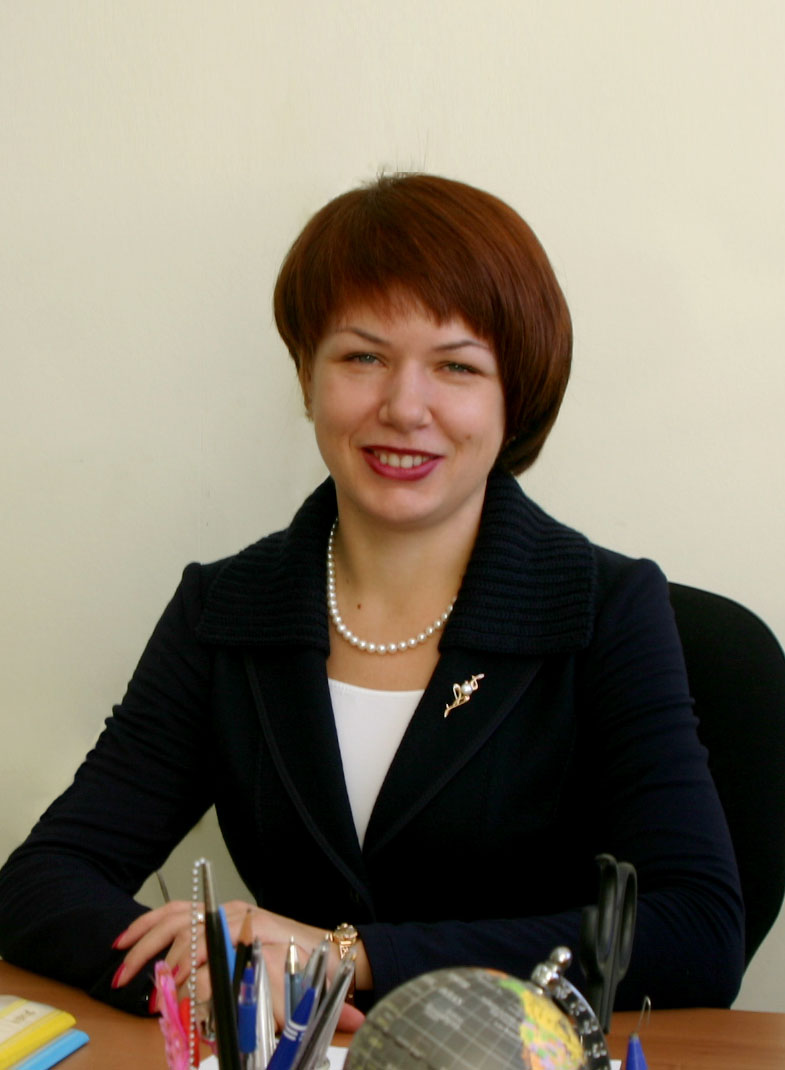
Morozova Irina  — Chief editor
Kemerovo State University (Institute of Education, Director)
doctor of psychological sciences
professor
Kemerovo, Russian Federation
SCOPUS: 57199505349 ResearcherID: V-6179-2017 SPIN: 9296-1166 ORCID: 0000-0002-0862-7225
Trezubov Egor  — Deputy Editor-in-Chief
Moscow state law University named after O. E. Kutafin (Department of Business and Corporate Law, Ass. Prof.)
from 01.01.2025 until now candidate of jurisprudence sciences
docent
Kemerovo, Russian Federation
ResearcherID: N-9078-2017 SPIN: 3027-3186 ORCID: 0000-0003-2607-0405
Abrosimova Elena  — Editorial board member
M.V. Lomonosov Moscow State University (kafedra kommercheskogo prava i osnov pravovedeniya, zaveduyuschaya)
doctor of jurisprudence sciences
professor
Moscow, Russian Federation
SPIN: 6953-6921 ORCID: 0009-0003-0579-0566
Agavelyan Ruben  — Editorial board member
Novosibirsk State Pedagogical University (Institute of childhood, director)
doctor of psychological sciences
professor
Novosibirsk, Russian Federation
SPIN: 4100-3870
Almazova Anna  — Editorial board member
Moscow State Pedagogical University (Institute of childhood, director)
doctor of pedagogical sciences
docent
Moscow, Russian Federation
SCOPUS: 57201726878 SPIN: 4324-5083 ORCID: 0000-0002-7042-6037
Anichkin Eugene  — Editorial board member
Altai State University (direktor yuridicheskogo instituta)
doctor of jurisprudence sciences
Academic rank Pochetnyy rabotnik vysshego professional'nogo obrazovaniya Rossiyskoy Federacii
professor
Barnaul, Russian Federation
SCOPUS: 57190570527 SPIN: 2822-8747 ORCID: 0000-0001-5432-8958
Ahmetova Daniya  — Editorial board member
Kazan Innovation University (Research Institute of Pedagogical Innovation and Inclusive Education, director)
doctor of pedagogical sciences
professor
Kazan, Russian Federation
SPIN: 7012-4719 ORCID: 0000-0002-1445-1609
Baburin Sergey Nikolaevich  — Editorial board member
The Institute of State and Law of The Russian Academy of Sciences (glavnyy nauchnyy sotrudnik)
doctor of jurisprudence sciences ,
doctor of jurisprudence sciences
professor
Moscow, Russian Federation
SCOPUS: 57224856284 SPIN: 1212-8135
Branovitsky Konstantin  — Editorial board member
The Urals State Law University (Department of Civil Procedure, prof.)
doctor of jurisprudence sciences
docent
Ekaterinburg, Russian Federation
SPIN: 2232-3188 ORCID: 0000-0002-9847-3417
Veryaev Anatoliy  — Editorial board member
Altai State Pedagogical University (kafedra informacionnyh tehnologiy, professor)
doctor of pedagogical sciences
professor
Barnaul, Barkaul, Russian Federation
SPIN: 8344-3280 ORCID: 0000-0002-4338-0811
Vorkachev Sergey  — Editorial board member
Kuban State Technological University
doctor of philological sciences
professor
Krasnodar, Russian Federation
SCOPUS: 56642838800 ResearcherID: W-4122-2017 SPIN: 5403-1090 ORCID: 0000-0002-6290-2582
Gavrilov Stanislav  — Editorial board member
Kemerovo State University (Yuridicheskiy institut, direktor)
doctor of historical sciences ,
candidate of jurisprudence sciences
professor
Kemerovo, Russian Federation
SPIN: 2979-7044 ORCID: 0000-0003-0748-1217
Gritskov Yuriy  — Editorial board member
Siberian Federal University
doctor of philosophical sciences
professor
Krasnoyarsk, Russian Federation
SPIN: 3226-1696
Gusev Aleksey  — Editorial board member
Lomonosov Moscow State University (Department of Personality Psychology, prof.)
doctor of psychological sciences
professor
Moscow, Russian Federation
SCOPUS: 55356351000 SPIN: 4816-0294 ORCID: 0000-0002-9299-7092
Zhdanova Svetlana  — Editorial board member
Perm State University
doctor of psychological sciences
docent
Perm, Russian Federation
SCOPUS: 56681975500 SPIN: 2696-8066 ORCID: 0000-0001-7105-3597
Zhukova Olga  — Editorial board member
Kemerovo State University
doctor of philosophical sciences
professor
Kemerovo, Russian Federation
SPIN: 4366-9638 ORCID: 0000-0001-9689-208X
Zolotukhin Vladimir  — Editorial board member
Kuzbass State Technical University
doctor of philosophical sciences
professor
Kemerovo, Russian Federation
SPIN: 8978-4599
Kalashnikova Marina  — Editorial board member
Yaroslav-the-Wise Novgorod State University (Department of Psychology, Head)
doctor of psychological sciences
professor
Veliki Novgorod, Russian Federation
SPIN: 8218-4757 ORCID: 0000-0001-5725-1044
Kim Yurii  — Editorial board member
Kemerovo State University (kafedra gosudarstvennogo i administrativnogo prava, prof.)
doctor of jurisprudence sciences
Kemerovo, Kemerovo, Russian Federation
SPIN: 3970-2193 ORCID: 0000-0001-7389-7670
Kameneva Veronika  — Editorial board member
Kemerovo State University
doctor of philological sciences
professor
Kemerovo, Russian Federation
SCOPUS: 57296227500 ResearcherID: L-3938-2018 SPIN: 9659-7646 ORCID: 0000-0001-8146-9721
Koshcheev Konstantin  — Editorial board member
Arbitration court of Kemerovo region
Kemerovo, Russian Federation
Krasikov Vladimir  — Editorial board member
All-Russian State University of Justice (RLA of the Ministry of Justice of Russia)
doctor of philosophical sciences
professor
Moskva, Russian Federation
SPIN: 5959-4314
Kurdumanova Olga  — Editorial board member
Omsk State Pedagogical University (kafedra himii i metodiki prepodavaniya himii, zaveduyuschaya)
doctor of pedagogical sciences
professor
Omsk, Omsk, Russian Federation
SPIN: 5284-8694
Laskowska Katarzyna  — Editorial board member
University of Białystok (kafedra ugolovnogo prava i kriminologii, zaveduyuschaya otdeleniem)
doctor of jurisprudence sciences
professor
Bialystok, Poland
SCOPUS: 57190420571 ORCID: 0000-0001-6767-3929
Mardahaev Lev  — Editorial board member
Russian State Social University (Department of Continuing Education and Socio-Pedagogical Technologies, professor)
doctor of pedagogical sciences
professor
Moskva, Moscow, Russian Federation
ResearcherID: T-8215-2017 SPIN: 6449-0103
Moskovchenko Olga  — Editorial board member
V. P. Astafyev Krasnoyarsk State Pedagogical University
doctor of pedagogical sciences
professor
Krasnoyarsk, Russian Federation
SCOPUS: 56377094400 ResearcherID: ABI-6525-2020 SPIN: 1808-9737 ORCID: 0000-0003-3269-3668
Nevzorov Boris  — Editorial board member
Kemerovo State University
candidate of physical and mathematical sciences from 01.01.1970 until now ,
doctor of pedagogical sciences from 01.01.1998 until now
Academic rank Laureate of the Government Prize in Education from 01.01.1998 until now ,
Honored Worker of Higher School of the Russian Federation from 01.01.1999 until now ,
Academician of the International Academy of Higher Education from 01.01.2001 until now ,
Honored Worker of Science and Education of RAE from 01.01.2008 until now
professor
Kemerovo, Russian Federation
SPIN: 1563-8417 ORCID: 0000-0002-2041-8610
Nemytina Marina  — Editorial board member
RUDN University (kafedra istorii prava i gosudarstva, zaveduyuschaya)
doctor of jurisprudence sciences
professor
Moscow, Russian Federation
SCOPUS: 27067872400 SPIN: 5956-1160
Osipova Svetlana  — Editorial board member
Siberian Federal University
doctor of pedagogical sciences
professor
Krasnoyarsk, Russian Federation
SPIN: 9267-4548
Ostapovich Igor Yur'evich  — Editorial board member
Oleg Kutafin Moscow State Law University
employee from 01.01.2024 until now
doctor of jurisprudence sciences
docent
Ekaterinburg, Russian Federation
ResearcherID: AAE-7245-2020 SPIN: 1309-9978 ORCID: 0000-0002-6664-1623
Plaksina Tatiana  — Editorial board member
Tomsk State University (kafedra ugolovnogo prava, professor)
doctor of jurisprudence sciences
docent
Tomsk, Tomsk, Russian Federation
SPIN: 2063-1302 ORCID: 0000-0001-5332-0014 Web Of Science: B-2697-2019
Rossinskiy Sergey  — Editorial board member
Institute of State and Law of the Russian Academy of Sciences (sector of criminal law, criminal procedure and criminology, Chief Researcher)
doctor of jurisprudence sciences
docent
Moscow, Moscow, Russian Federation
SPIN: 8295-9884 ORCID: 0000-0002-3862-3188
Samovich Yuliya  — Editorial board member
Kazan branch of the Federal State Budgetary Educational Institution of Higher Education "Russian State University of Justice named after V.M. Lebedev" (Department of State and Legal Disciplines, Professor)
doctor of jurisprudence sciences from 01.01.2008 until now
professor from 01.01.2012 until now
Kazan', Kazan, Russian Federation
SPIN: 5295-5631 ORCID: 0000-0001-5739-8089
Slyshkin Gennadiy  — Editorial board member
Russian Academy of National Economy and Public Administrarion under the President of the Russian Federation (Research Laboratory «Linguistic Security and Psychology of Information Impact» of the Institute of Law and National Security, head)
doctor of philological sciences
professor
Moscow, Russian Federation
SCOPUS: 57191286505 ResearcherID: G-1470-2014 SPIN: 2417-4789 ORCID: 0000-0001-8121-0250
Filatova Ul'yana  — Editorial board member
Irkutsk State University
doctor of jurisprudence sciences
docent
Irkutsk, Russian Federation
SCOPUS: 57200545365 SPIN: 2812-6520 ORCID: 0000-0001-6189-4317
Khaliapina Lyudmila  — Editorial board member
Peter the Great St. Petersburg Polytechnic University
doctor of pedagogical sciences
professor
Sankt-Peterburg, Russian Federation
SPIN: 6148-4363 ORCID: 0000-0003-1283-2245
Chernenko Tamara  — Editorial board member
Kemerovo State University
doctor of jurisprudence sciences
Academic rank Honored lawyer of Russia
professor
Kemerovo, Russian Federation
SPIN: 7005-3557 ORCID: 0000-0001-5980-8547
Churekova Tatiana  — Editorial board member
Kemerovo State Institute of Kulture
doctor of pedagogical sciences
professor
Kemerovo, Russian Federation
SPIN: 2132-0691 ORCID: 0000-0001-8467-1271
Sheveleva Svetlana  — Editorial board member
Southwest State University
doctor of jurisprudence sciences
professor
Kursk, Russian Federation
SPIN: 5495-5730 ORCID: 0000-0002-8358-8924
Shepel Tamara  — Editorial board member
Novosibirsk State University (department of civil law, head)
doctor of jurisprudence sciences
professor
Novosibirsk, Russian Federation
ResearcherID: AAH-7567-2019 SPIN: 2940-9388
Yakovleva Irina  — Editorial board member
Moscow City Pedagogical University (Department of Oligophrenopedagogics and clinical foundations of special pedagogy, Head)
doctor of pedagogical sciences
professor
Moscow, Russian Federation
ResearcherID: ABA-1529-2021 SPIN: 6276-2506 ORCID: 0000-0002-2930-8557
Yashchuk Tatiana  — Editorial board member
Omsk State University named after F.M. Dostoevsky (kafedra teorii i istorii gosudarstva i prava, prorektor po nauchnoy rabote, professor)
doctor of jurisprudence sciences
professor
Omsk, Russian Federation
ResearcherID: ABA-1529-2021 SPIN: 5320-8909 ORCID: 0000-0002-2930-8557
JURISPRUDENCE
OTHER PUBLICATIONS
INDEX OF ARTICLES
PEDAGOGY IN HIGHER EDUCATION
COGNITIVE STUDIES
LEGAL THEORY AND PRACTICE
METHODOLOGY AND TECHNOLOGY OF UNIVERSITY EDUCATION
THEORY AND METHODOLOGY OF EDUCATION AND UPBRINGING
PUBLIC AND STATE LAW
THEORETICAL AND HISTORICAL LEGAL SCIENCES
CRIMINAL LAW
PRIVATE AND CIVIL LAW
INTERDISCIPLINARY COGNITIVE STUDIES
CORRECTIONAL PEDAGOGY
GENERAL PEDAGOGY, HISTORY OF PEDAGOGY AND EDUCATION
INTERDISCIPLINARY LANGUAGE STUDIES
EDITORIAL ARTICLES
BOOK REVIEWS

Архивные рубрики

PHILOSOPHY
Archived
Publisher
Kemerovo State University
Founder
Kemerovo State University
The certificate of registration of the periodical
ПИ № ФС 77 - 67379. Выдан Роскомнадзором

Bulletin of Kemerovo State University. Series: Humanities and Social Sciences publishes full articles, reviews and book reviews in Russian and English language. 

The Journal publishes works on key issues of law and pedagogy, materials on the results of interdisciplinary research on cognitive processes and language.

Archiving

  • A national library: Russian State Library (RSL).
  • Other: Library of Kemerovo State University (print.), National Electronic-Information Consortium (NEICON); Scientific electronic library eLibrary.ru, V.D. Fedorov Kemerovo Regional Scientific Library (print.)

Plagiarism detection

The Journal uses plagiarism detection software  Antiplagiat and Crossref Similarity Check. In case of plagiarism, the Editorial Board follows the COPE guidelines and its own Publishing Ethics.

We adhere to a very strict ethical policy against plagiarism, false citation, and data fabrication. The authors are held responsible for the content of the manuscript submitted. They shall not modify the text to bypass anti-plagiarism or increase originality. Should the editors detect any attempts to drive up the originality percentage, the manuscript will be rejected immediately.

Disclosure and Conflict of Interests

Authors are obliged to disclose any existing or potential conflicts of interest that may influence the decision to publish their work.

The Reviewers should not consider manuscripts in which they have a conflict of interests resulting from competitive, collaborative, or other relationships or connections with any of the Authors, companies, or institutions connected to the papers.

Unpublished materials cannot be used in research without the written consent of the Author(s). Privileged information or ideas obtained through peer review must be kept confidential and cannot be used for personal advantage.

Preprint and Postprint Policy
As part of the submission process, you are required to confirm that your manuscript has not been previously published or submitted to any other journal. We accept manuscripts previously published on public or personal websites if they are unrelated to any other Publishers.

After publication, please make sure you include a URL link to your article on our website whenever you cite or share it. 

Formatting Requirements

  • Submit your manuscript as a .doc or .rtf file, with indentations but no paging or special preformatting settings.
  • Font – Times New Roman, font size – 10, line spacing – 1.0. Do not indent a paragraph with tabulation or series of spaces.
  • The recommended size for a research article is 35,000–40,000 characters, including abstract, keywords, and references; a review article can exceed the limit of 40,000.
  • The title, information about the author(s), abstract, keywords, footnote references, and titles of tables and figures should be available in Russian and English.
  • The title (max. 10-12 words) should be short, informative, and scientific. Make sure your title reflects the subject, topic, and objective of your research.
  • Information about the Author(s):
    • Names: First names precede the last names. In the case of several co-authors, the order depends on the contribution of each author.
    • Affiliations: please use only formal names, no abbreviations. If you believe an acronym is compulsory, mention it in brackets after the full name of your institution.
    • The full name of your affiliation precedes the country and city, separated by a comma.
    • Include your profile link in ORCID.
    • E-mail of the Corresponding Author
  • The abstract (150–250 words) should be original and completely reflect the main results and novelty of the article. The best way to structure your abstract is to let it follow the structure of the article itself: introduction, tasks and objectives, methods, results, and conclusion.
  • Keywords (6–10) identify the subject of the manuscript and facilitate computer-based search. You are free to use separate words or phrases, but not more than three words per phrase.
  • The body of your article should include the following sections:
    • Introduction: Make sure your introduction reflects the objectives of your research. This part gives a brief review of the publications related to the matter and proves its relevance.
    • Methods and Materials: This section describes the experiment or the theoretical background.
    • Results: this paragraph features the experimental or theoretical research results given as text or tables, figures, illustrations, etc. It can be divided into subsections with their own titles.
    • Conclusions: here you briefly summarize the main results of your research. Naturally, the conclusion answers the question posed by the introduction, restates the relevance of the results, contains recommendations, proposes further research, etc.
  • Illustrative material:
    • place the tables and figures inside the body of your article;
    • provide each table or figure with a link in the text;
    • enclose figures made in MS Office as separate .xls, .vsd, or doc files;
    • enclose scanned images and photographs as separate .tif, .jpg, or .png files with a resolution of > 300 dpi;
    • tables are editable text, not images.
  • Additional information
    • Conflict of Interests: this section indicates a real or potential conflict of interests. If there is no conflict of interests, you should write that “the author declares that there is no conflict of interests regarding the publication of this article”. Please make sure you have informed the Editor in advance about any kind of potential conflict of interests. Should the Editor reveal it during the initial check-up, your manuscript can be rejected.
    • Authorship and Contribution: specify the contribution of each author; CRediT may help you to define their roles in the project. 
      • In determining the authorship and contributorship, the editorial office follows the authorship criteria:

        1. Substantial contributions to the conception or design of the work; or the acquisition, analysis, or interpretation of data for the work; AND.
        2. Drafting the work or revising it critically for important intellectual content; AND
        3. Final approval of the version to be published; AND
        4. Agreement to be accountable for all aspects of the work in ensuring that questions related to the accuracy or integrity of any part of the work are appropriately investigated and resolved.
    • Acknowledgments: This section is optional and contains an expression of gratitude to those who contributed to the research.
    • Funding: indicate the organization that supported your research and the publication of this article. Remember that by failing to indicate funding source you may cause a conflict of interests.
  • References: 25–40 for an original research article, 80 for a review. It is a mandatory structural part, which reflects the scientific coverage of the topic and allows you to verify the reliability of the data used in the study. The list of references allows you to recognize and use the ideas of other authors, avoid accusations of plagiarism as well as demonstrate the scale and depth of research by quoting the works of other authors and their previous publications. References to the latest publications and foreign literature can highlight the relevance of a scientific publication.  
    • The editorial office does not accept for publication manuscripts without a list of references.
    • Include in the list of references only the sources used to write the article.
    • References to unpublished works, state documents (decrees, laws, etc.), historical documents, newspaper articles, Internet sources without authorship (forums, blogs, etc.), examples from fiction, encyclopedias, dictionaries, etc. are given as footnotes.
    • References are given in square brackets, numbered (starting from the first number).
    • Place the list of references after the body of the article in the order of mention in the text, preceded by the word References.
    • Instead of including dissertations, abstracts of dissertations, educational and methodological manuals, it is better to reference articles from scientific journals, conference materials, monographs, etc., published by the same author.
    • Include 7–10 sources published in the last 5 years.
    • Limit self-citation to 10 % of references from the total number of sources. Use of self-citation should be justified.
    • Provide the description of the sources in accordance with Russian National Standard (GOST 7.05-2008 Bibliographic reference. General requirements and rules of compilation). The description of the source in Latin is based on the Chicago style citation. Replace slashes and hyphens used in GOST with commas and dots.
    • The bibliographic description of the publication includes:
      • the last name and initials of every author (regardless of their number),
      • the full title of the work,
      • title of the book or journal (if specified),
      • city, publisher's name, year of publication,
      • volume (for multi-volume publications); volume and issue (for periodicals),
      • for articles – the numbers of the first and last page; for monographs – the total number of pages.
    • If the source has DOI, add it to the bibliographical description.
    • When referring to a part of a book or collection (article, chapter, section, etc.), indicate its first and last pages in the list of references.
    • Provide a translation or transliteration of the source in square brackets after the Russian description.
    • Transliteration of the Russian authors’ last name should match the one provided in their other publications (in foreign language) or in their profiles (ORCID, Scopus). If there is no such information, use transliteration according to the LC standard (Library of Congress).
    • Do not transliterate the names of foreign authors, instead use their name as it is originally written (for example, J. Austin – J. Austen, not Dzh. Ostin).
    • If the title of publication is written in alphabet, other than Latin, translate it into English. If authors of the source material already provided a translation, use the author’s version translation. You can find this information on the website of a particular journal or in digital scientific library (eLIBRARY.RU).
    • Provide the names of journals written in alphabet, other than Latin, according to how the journals prefer to be quoted. If the journal has no such information, then use transliteration according to the LC standard. Italicize the name of the journal.
    • If the source text written in alphabet, other than Latin, then the language of the publication is indicated in parentheses at the end of the description, for example (In Russ.), (In Jap.), (In Ukr.), etc.


  1. Instruction for registration profile ORCID.
  2. Examples of the description of the cited publications.
  3. Systems of text translation into Latin TranslitterationTranslit!
  4. Systems of automatic generation of bibliographic description: BibmeCitefastCitation Creatio

Compliance requirements of publication ethics apply to all members of the publishing process – authors, editors, reviewers, and the publisher of the journal. The editorial board monitors compliance with the ethics requirements based on the manuals prepared by specialized organizations, and publishers, as well as the Association of Science Editors and Publishers (ASEP). The main standards relied on by the journal Bulletin of Kemerovo State University are those developed by the Committee on Publication Ethics (United Kingdom), by the publisher Elsevier (Netherlands), and the Declaration "Ethical Principles of Scientific Publications" (adopted by ASEP). 

The responsibility of editors

  1. The editors are personally and independently responsible for the content of the materials published.
  2. The editors make fair and objective decisions, regardless of any commercial interest and provide a fair and efficient process for the independent review.
  3. The editors evaluate manuscripts' intellectual content, adhering to the principle of equality of Authors.
  4. The editors do not work with articles for which they have a conflict of interest.
  5. The editors resolve conflict situations arising during the editorial process.
  6. The editors of the journal publish information concerning corrections, rebuttals, and review articles in case the need arises.
  7. The editors do publish the final version of the article  only after agreement with the authors.
  8. The editors correctly conduct correspondence with authors and reviewers, timely respond to letters.

The responsibility of the reviewers

  1. The reviewer evaluates his or her own availability before the examination of the manuscript and accepts materials for review only if the reviewer is able to allow for sufficient time as to ensure the quality his or her work.
  2. The reviewer notifies the editorial staff of any conflict of interest (if one exists) before the start of the review of the article.
  3. The reviewer does not send information about the article and or any of the data contained within the article to any third party, and does not use the information obtained from the article for any personal and or commercial purposes.
  4. The reviewer draws conclusions about the quality of the article based on objective data, without expressing a personal relationship to the author.
  5. The reviewer uses only proper and appropriate language and explanations in respect to the articles, avoiding any personal remarks.
  6. The reviewer correctly conduct correspondence with editors, timely respond to letters.

The responsibility of the authors

  1. The author is responsible for the accuracy of the data presented in the article, and guarantees the originality of its content.
  2. The author notifies the editors if the article is based on previously published materials.
  3. The author does not submit the same article to different journals for review.
  4. All co-authors consent to the submission of their articles to the journal.
  5. The author informs the editorial staff of a potential conflict of interest.
  6. The author correctly cites his or her previous works and others' works, avoids self-plagiarism and an artificial increase in the volume of publications.
  7. The list of authors included only individuals who have made significant contributions to the research.
  8. If necessary, the authors either adjust the data presented in the article, or refute them.
  9. The author, who is acting as the contact with journal, informs all other co-authors of all changes and suggestions from the editorial staff, and does not make decisions regarding the article alone without the written consent of all co-authors.
  10. The author correctly conduct correspondence with editors, timely respond to letters.

The responsibility of the publisher

  1. Publisher supports scientific communications, finances this process, is responsible for adhering to the principles and procedures that contribute to the ethical duties of all participants in the editorial and publishing process.
  2. The publisher does not affect the editorial policy of the journal.
  3. The publisher provides legal support to the journal if necessary.
  4. The publisher provides for the timely release of next issues of the journal.
  1. General

    • We accept manuscripts of original articles and reviews in Russian and English.

    • The authors guarantee that:

      • they own the exclusive copyright for the manuscript they submit;

      • they publication will not infringe a third party’s copyright;

      • the manuscript has never been published;

      • they did not submit it to any other journal;

      • the list of authors includes only those who contributed to the research.

      • they agree with the Publication Ethics of the journal.

  2. Submission procedure

    • E-mail us your manusc, additional materials, and accompanying documents (Consent to Personal Data Processing, Consent to the Dissemination of Personal Data, Cross-Border Transfer of Personal Data) or upload them as separate files using your personal account on our website.

    • If you previously submitted this article to some other journal but it was not accepted for publication, please inform us in your letter lest we should accidentally reject your manuscript after the initial check-up.

    • Two manuscripts submitted by the same author cannot be published in one issue or in two consecutive issues.

    • Please remember that the Editors do not enter into correspondence with Authors to discuss the content, methods, or formatting of the articles submitted. Neither do we improve the scientific and methodological quality of the paper. 

  3. Registration and Initial Check-Up

    • The registration and initial check-up stage normally take five days. We will e-mail you about the current status of your manuscript. If you did not get a letter from us within five days, it means that we did not receive your submission due to some technical problem. Please send your letter again or call +7(3842)55-87-61.

    • The Editor checks all submitted manuscripts for compliance with the profile of The Bulletin, Publishing Ethics (plagiarism, doubling, etc.), and formatting requirements (text volume, structure, number of keywords, abstract volume, references, in-text references, information about the Authors, etc.)

    • If your article is beyond the scope of the Bulletin or violates our Publishing Ethics, you will receive a substantiated rejection letter.

    • If the submitted article does not meet our formatting requirements, it will be returned to you for revision and improvement. 

    • Should you fail to e-mail us the improved version within 10 days, your next attempt will automatically be classified as a new submission.

    • Please visit our website to find out more about formatting requirements.

  4. If the manuscript passes the initial check-up, it will be peer-reviewed by two experts in accordance with the rules established by the Editorial. The review process is double-blind to provide anonymity for both authors and reviewers.

  5. Admission Procedure

    • After your manuscript has been approved for publication, the Editor will inform you by e-mail and state the approximate publication date.

    • We do not guarantee that your manuscript will be published in the next issue: the review procedure usually takes some time.

    • We can provide you with an official letter that your manuscript has been accepted for publication. Do not hesitate to request a confirmation letter, if needed.

    • publishing license agreement is signed by the Author(s) after the article is recommended for publication.

    • Papers are published depending on the registration date and editorial plans. Articles on topical issues and break-through research can be published out of turn by the decision of the Editor-in-Chief.

  6. Editing and Publishing

    • All manuscripts are published only after they undergo literary editing and proofreading.

    • All changes made by the Editor require your consent by e-mail.

    • You will receive the typeset article for final approval before publication.

    • All articles have a printed and online version.


The Journal does not charge authors for reviewing, editing, publishing, open access, site content, electronic depositary, etc. The journal is open access and aims at ensure that all the articles we publish are available for free. The Journal financed by the Kemerovo State University.

  1. After your paper has successfully passed the initial check-up stage, it will have to undergo a double review. The reviewer reviews the manuscript without knowledge of the authors' names. Likewise, the author does not know the name of the reviewer. Correspondence between the author and the reviewer takes place via e-mail in the edition on the journal.
  2. Reviewers will be appointed by the editorial board. The peer review can be conducted by the members of the Editorial Board or by acknowledged academic specialists in the sphere.
  3. Reviewers follow the rules of publication ethics established by the editorial board.
  4. Appointed reviewers can refuse to analyze the manuscript in case there is a conflict of interest or if they cannot provide an unbiased review for some reason.
  5. Reviews (review sample) are written in free form; however, they clarify the following compulsory aspects:
  • Does the paper correspond with the profile of the journal?Is the topic relevant?
  • Does the paper possess any theoretical and practical significance?
  • Is the author’s approach novel?
  • Is the style scientific and clear?
  1. We will normally send you anonymous reviews of you paper within 21-60 days.
  2. The reviews contain one of the following recommendations:
  • publish the paper as it is;
  • publish the paper after it has been improved according to the recommendations of the reviewers if the author agrees to make such improvements;
  • publish the paper only after it has been improved according to the recommendations of the reviewers;
  • reject the manuscript with the right to resubmit it;
  • reject the manuscript with no future resubmission.
  1. Your manuscript might have to undergo an extra review if considered necessary.
  2. In case the editor e-mails you a list of suggested improvements, you can accept them or to give a substantiated refusal.
  3. Please e-mail your improved variant back to the editor within 30 days; otherwise your manuscript will have to start from square one.
  4. Your improved version has to be accompanied by a cover letter as a separate file (Name_answer) where you will have to respond to the criticism and explain all the improvements you have made in your paper (Name_paper_improved). Please highlight all the improvements in the text.
  5. If the reviews are negative, you will be sent a substantiated rejection letter signed by the chief editor or the deputy editor.
  6. In case of rejection, you may challenge our decision by sending a letter of appeal to the chief editor. In your letter, please, explain why your manuscript should be reconsidered. Enclose an improved version of your paper, if necessary. Please, mind that the decision made by the chief editor is final and cannot be challenged.
  7. The chief editor considers the final edited version of every paper, reviews, and the author’s response and makes the final decision (approved / returned to the author for further revision / rejected). After that, the editor will inform you about the final decision of the chief editor within 10 days.
  8. Should you need a copy of the reviews, do not hesitate to send us your request. Mind that the copy will be anonymous.
  9. Copies of all reviews can be submitted to the Supreme Qualifying Committee upon request.
  10. Original reviews are stored in the editorial office for 5 years.
  11. In case the authors do not respond to the constructive feedback from the reviewers or the editor, the manuscript is likely to be rejected.

The Editors of The Journal adhere to the following retraction policy:

The editors can retract a published article to inform the readers that the article contains faulty / unreliable data, plagiarisms, an unreported conflict of interests, or doubling, i.e. if new information has been revealed that can affect the interpretation of the published data or recommendations on their use.

Therefore, an article can be retracted if the Editors found out that

  • the article violates the ethics of scientific publishing;
  • the author(s) published one and the same data or manuscript in several journals without a serious reason, authorization, or cross reference;
  • the bulk of the article was copied prom a previously published work by a different author;
  • if the article contains invalid data, be it the result of a deliberate violation, miscalculation, experimental error, or misprint.

Retraction can be initiated by authors, readers, reviewers, editors, and other publishers by officially appealing to the Editorial Board. An expertise conducted by the Editorial Board can also trigger a retraction procedure.

If the Editorial Board failed to answer a retraction claim from the author within 10 days, the author is free to appeal to the Society of Science Editors and Publishers.

If the Editorial Board decides to retract the article based on the violations mentioned above, the corresponding author is sent a notification that explains the reasons for the retraction. The final decision takes into account the explanation given by the author. Should the author fail to respond within 10 days, the Editors are free to retract the publication without the author’s concern. Irrespective of the fact whether the authors accept the standpoint of the editorial board or not, the retraction is an abiding procedure.

The retraction protocol is sent to the corresponding author, the Society of Science Editors and Publishers, eLIBRARY.RU, and CUBERLENINKA e-libraries. A retraction note, which states its reason and date, is published both in paper and online versions of the Journal. After that, the article will be marked as RETRACTED in all reference databases. Retracted articles are excluded from all citation indices and reference lists and do not affect electronic calculations of one’s personal scientific achievements.

After the retraction procedure has been completed, the Editorial Board retains the right not to accept other manuscripts submitted by the author(s) in question for a certain period.

Article publishing charge

Dear Authors!

Our primary goal is to promote your scientific results. We do that by publishing your content promptly and up to the mark. To pursue this goal, we have to change our publication fee policy.

All articles published in Bulletin of Kemerovo State University. Series: Humanities and Social Sciences will keep their Gold Open Access status, i.e., they are and will be available on our website for reading and downloading without restrictions, payment, or embargo period.

All articles submitted and accepted after January 1, 2026, require a publishing charge of 10,000 rubles (if paid in rubles) and 125 US dollars (if paid in US dollars), regardless of volume, language, graphics, etc. Submission and peer review are free of charge, which means that you pay the article publishing charge only after you have received a positive review and your manuscript have been accepted for publication by the Chief Editor.

  • Correctional pedagogy 
  • Methodology and Technology of University Education
  • General Pedagogy, History of Pedagogy and Education
  • Theory and Methodology of Education and Upbringing

The article processing charges cover the costs for editing (Ru, En), post-review technical processing, DOI assignment, online hosting and maintenance, indexing in academic databases, and publishing.

The corresponding author manages the payment. Publications can be financed by any stakeholders, e.g., authors, universities, research organizations, grant funds, etc.

The manuscript acceptance email contains the payment deadline and documents, i.e., Agreement for Provision of Editorial and Publishing Services, which you fill in and send us by e-mail or regular mail (two copies). The Agreement form is different for legal entities and individuals. To confirm the payment, you email us a scan of the payment receipt.

Please note that prepayment does not guarantee publication. Should you make an advance publishing charge payment and your article receives a negative review, we will return the money, minus bank commissions. If your manuscript has been accepted for publication, please make sure that you keep the payment deadline because we cannot publish your manuscript until the money has arrived in the account of Kemerovo State University.

We will refund the publication fee if an error on our part has violated the open access model and we fail to correct it within 30 business days of posting. If you become aware of an error in the open access or licensing status of your article, please contact us immediately.

However, no article publication charges will be refunded if the retraction occurred as a result of your own error or misconduct.

The publication fee is subject to change and is made at the rate in effect on the date you submitted your manuscript. We inform our authors about publication fee changes on our website 30 days in advance.

The Journal has no fee waiver policy. We do not provide copyright issues and pay no royalties.

We express our deepest gratitude for all your support over the years and hope that you will continue to consider Bulletin of Kemerovo State University. Series: Humanities and Social Sciences as a platform that introduces your research results to the global scientific community.

For any questions, do not hesitate to contact us at j.juredu@yandex.ru

The printed version of the journal "Bulletin of Kemerovo State University. Series: Humanities and Social Sciences" is distributed through a subscription in the catalog "Press of Russia" (subscription index – 94232).

To purchase individual issues of the printed version, please contact us at email or call +7(3842)55-87-61.

The paid-off issues may be collected at the Editorial Office: Kemerovo State University, Office 149, Bld.2, 73, Sovetskii Ave, Kemerovo, Kemerovo region (Kuzbass), 650000, Russia.

How you can subscribing and pay for the issue

Pay online  (!) How to make a payment

4 times a year

Copyright Notice

Authors who publish with this journal agree to the following terms:

  1. The Authors retain copyright and grant the Journal the right of first publication with the work under a Creative Commons Attribution License that allows others to share the work with an acknowledgement its authorship and initial publication in this Journal.
  2. The Authors are free to enter into separate contract arrangements for the non-exclusive distribution of the published version, e.g. they can post it at the repository of their home university or publish it in a book, with an obligatory acknowledgement of its initial publication in this Journal.
  3. The Authors are free to post their work online, e.g., in university repositories or on their website, prior to and during the submission process, as it can encourage productive feedback and a greater citation of the work after its publication (See The Effect of Open Access).

Bulletin of Kemerovo State University. Series: Humanities and Social Sciences is an open access journal (Gold OA). All articles are freely available to readers immediately upon publication.

Our open access policy follows the Budapest Open Access Initiative (BOAI): the articles we publish are available on the Internet. Any user is free to read, download, copy, distribute, print, search, cite, scan, and index the articles, store them as data using various software, or use them for any other legal purpose, without financial, legal, or technical barriers other than those inseparable from gaining access to the Internet.

For more information please read BOAI statement.

Privacy Policy

This Privacy policy covers all personal data you submit together with your manuscript to Bulletin of Kemerovo State University. Series: Humanities and Social Sciences at https://vestnik-hss.kemsu.ru/

The Journal belongs to the Federal State Budgetary Institution of Higher Education Kemerovo State University (Primary State Registration Number OGRN 1034205005801, Tax Payer Number INN 4207017537). Hence, your personal data are processed by the Kemerovo State University, hereafter referred to as Operator or "we", "us", "our".

Our headquarters are based at 6 Krasnaya Ul., Kemerovo, 650000, Russia.

We kindly ask you to read this Privacy Policy before submitting any personal information. Should you disagree with any of its provisions, please leave the site.


1. Glossary

1. This Privacy policy operates the following terms:

1.1. Automated processing of personal data means we process your personal data using computer technology.

1.2. Blocking of personal data is a pause in processing, except in cases where processing cannot be avoided to clarify personal data.

1.3. Personal data information system covers the personal data in our database plus the information technologies and tools needed for processing.

1.4. Confidentiality of personal data is a mandatory requirement: anyone who has gained access to your personal data cannot disseminate them without your consent or a reliable legal basis.

1.5. Anonymization of personal data makes it impossible to determine the owner of personal data without additional information.

1.6. Processing of personal data presupposes any procedures, automatized or not, i.e., collection, recording, systematization, accumulation, storage, clarification (updating, modification), extraction, use, transfer (distribution, provision, access), depersonalization, blocking, deletion, destruction, etc.

1.7.  Operator, also identified as "we", "us", "our" in this Privacy Policy, is the Kemerovo State University, i.e., the organization that, independently or with the people/organizations it employs, processes the personal data, determines the purposes of processing, the part of personal data to be processed, and the exact processing operations.

1.8. Personal data is an umbrella term for any information related directly or indirectly to you as a private entity, i.e., Personal Data Owner.

1.9. Personal data permitted for distribution by the owner means that the personal data owner permits their data to be processed by providing explicit consent in line with the current Russian legislation.

1.10. Privacy Policy is ​​this document and all its future amendments published at https://vestnik-hss.kemsu.ru/

1.11.  User / Personal Data Owner is the owner or subject of personal data, a legally competent individual using our website for their own benefit.

1.12. Provision of personal data means disclosing personal data to a person or a group of persons.

1.13. Website is the official website of Bulletin of Kemerovo State University. Series: Humanities and Social Sciences, i.e., the Journal as a collection of graphics, information, software, and databases that make it available on the Internet at https://vestnik-hss.kemsu.ru/

1.14. Dissemination of personal data denotes actions aimed at disclosing personal data to an indefinite number of persons.

1.15. Trans-border transfer of personal data occurs when personal data are transferred abroad, i.e., to a foreign government body, a foreign citizen, or a foreign legal entity.

1.16. Destruction of personal data makes it impossible to restore the content of personal data in the database, which may presuppose the destruction of tangible personal data media.

1.17. Cookies are a small block of data sent by a web server to the user’s device used to access the site, which the web browser sends to the web server each time in an HTTPS request when attempting to open the corresponding site.

1.18. Personal Data Subject / Owner is a legally competent individual who uses the website in their own interests.

1.19.  IP address is a unique network label assigned to a node in a computer network built using the IP protocol.


2. General provisions

2.1. This Privacy Policy defines the purposes, content, and procedures for processing and protecting personal data in line with the laws of the Russian Federation. It stipulates our responsibilities for processing and protecting your personal data, including their confidentiality.

2.2. When processing your personal data, we follow the principles in this Privacy Policy and the personal data laws of the Russian Federation. We respect your freedoms and rights to privacy and personal and/or family confidentiality.

2.3. This Privacy Policy applies only to the data we obtain from your using our website and the data you submit as part of contractual obligations.

2.4. You, the personal data user, provide your personal data and consents to its processing voluntarily, of your own free will, and in your own interests. Your consent must be specific, objective, informed, conscious, and unambiguous. Mind that we do not verify the accuracy of the personal data you submit.

2.5. By using our website, you agree to this Privacy Policy and your personal data processing.

2.6. By accepting this Privacy Policy, you give us your consent to process the personal data specified in Section 3, including such operations as collection, recording, accumulation, storage, clarification (updating, modification), retrieval, use, transfer to third parties (distribution, provision, access), depersonalization, blocking, deletion, and destruction (see purposes in Section 3).

2.7. By refusing to give your consent to personal data processing for the purposes specified in Section 3, you may seriously limit you access to the services provided by our website.

2.8. If some of your personal data are at variants with the facts or fail to compile with the requirements on our website, you might not be able to take full advantage of all the services provided, and use of the website will be available to you in a limited mode.

2.9. Operator’s rights:

We, the operator,

- collect personal data from the site;

- provide access to the site;

- collect, record, accumulate, store, clarify (update, modify), retrieve, use, transfer (disseminate, provide, access), depersonalize, block, delete, and destroy personal data;

- transfer personal data to third parties for purposes in Section 3;

- reserve the right to continue processing the personal data without your consent, provided there are legal grounds, even if you revoke your consent to processing;

- may refuse your second request for information regarding your personal data available to us, provided we send you a reasoned response in line with the federal law;

- disseminate the personal data owner to separate dissemination consent.

2.10. Operator’s Responsibilities:

We, the operator,

- use your personal data solely for the purposes specified in Section 3;

- provide you with information regarding your personal data upon request;

- are not be liable for the loss or disclosure of confidential information if it:

- became public prior to its loss or disclosure;

- was received from a third party before it was submitted to us;

- was disclosed with the consent of the user;

- notify you or your representative of the processing upon your request;

- do not distribute personal data to third parties without your consent, unless otherwise provided by law;

- provide you with the information and data specified in your request in an accessible form and without specifying the personal data related to other personal data owners, unless there are legal grounds for disclosing such personal data;

- inform you if we make decisions based solely on the automated processing of personal data;

- explain the possible legal consequences of this decision, provide you with the opportunity to object, and explain how you can protect your rights and legitimate interests. The objection is to be responded to within 30 days from the date of its receipt.

- explain the legal consequences of refusing to provide your personal data and/or consent to processing, if the provision of personal data and/or consent are mandatory in accordance with federal law;

- record, systematize, accumulate, store, clarify (update, modify), and retrieve personal data submitted by Russian citizens online or offline using databases located within the Russian Federation, except in cases specified by the current Russian legislation;

- protect the personal data we receive and their confidentiality.

2.11. User’s rights:

Send us a request at j.juredu@yandex.ru, if you need:

to demand us to update, block, or destroy your personal data it if it is incomplete, outdated, inaccurate, illegally obtained, or unnecessary for processing;

- information about the measures we take to protect your personal data;

- information regarding your personal data (see Appendix 4);

- to send a follow-up request regarding your personal data (within 30 days after the initial request);

- to re-apply or send a follow-up request for information regarding your personal data, as well as to review your personal data (you may do it before the expiration of 30 days if you failed to provide the necessary personal data in full following the review of the initial request; make sure you provide a justification for the follow-up request);

- to retract your consent to personal data processing or dissemination;

- to protect your rights and legitimate interests, including compensation for damages and/or moral damages, in court;

- to report our actions or inactions to the authorized body responsible for personal data protection or to court.

2.12. User’s responsibilities

You, the User, are expected to:

- comply with the requirements in Paragraph 1.11;

- provide accurate Personal Data.

2.13. Databases with personal data of Russian citizens are located on the territory of the Russian Federation.

2.14. We process your personal data lawfully and fairly to fulfill our functions and obligations as assigned by law, and to exercise the rights and legitimate interests of our own and other persons. We transfer (dissemination, provision) and use personal data only in cases and according to the procedure stipulated by federal laws and with your consent.

2.15. We receive your personal data directly from you as the personal data owner, except in cases where personal data is transferred as part of contractual relationships.

2.16. To process your personal data, we need your consent either in writing or as part of implied actions.

2.17. The principles of processing personal data:

2.17.1. We process personal data lawfully and fairly.

2.17.2. We pursue specific and legitimate purposes. We do not process personal data for other purposes but those it was collected for and we do not collect personal data excessive to the purpose.

2.17.3. We do not combine databases with personal data for incompatible purposes.

2.17.4. We process only the personal data relevant to the purposes we promise you to achieve.

2.17.5. The content and volume of personal data processed must correspond to the purposes of processing. The processed personal data must not be excessive in relation to the stated purposes.

2.17.6. Make sure the personal data you submit is accurate, relevant, and sufficient. We delete or rectify incomplete or inaccurate data.

2.17.7. We store personal data in a form that allows identification of its owner only for as long as it is needed to achieve the processing purposes, unless the storage period is established by federal law or an agreement to which the owner is a party, beneficiary, or guarantor. We destroy or anonymize the data upon achieving the processing purposes or when these purposes are no longer necessary, unless otherwise provided by federal law.

2.17.8. Before commencing the cross-border transfer, we ensure that the destination state protects the rights of personal data owner.

2.17.9. We transfer personal data of our authors to international scientific publication databases, e.g., Scopus, Web of Science, PubMed, DOAJ, Dimensions, etc. According to Russian laws, this type of cross-border transfers of personal data falls for the implementation of events in the field of culture, science, and education. Hence, the requirements of Parts 3–6 and 8–11, Article 12 of the Federal Law On Personal Data (Part 2, approved by Russian Government Resolution No. 2526, December 29, 2022) do not apply to operators carrying out cross-border transfers of personal data for the purpose of fulfilling the functions, powers, and duties imposed on state and municipal authorities by international treaties of the Russian Federation and the legislation of the Russian Federation.

2.17.10. We do not control and are not responsible for the processing of information by third-party websites accessible via links available on our site.


3. Purposes, volume and categories of personal data collection

3.1. We need your personal data for the following purposes:

3.1.1. To create a personal account on our site, you have to provide the following personal data:

- email address;

- telephone number;

- last name, first name, and patronymic (if any).

3.1.2. To communicate with you and promptly respond to your requests, complaints, etc., we need to be able to send you feedback, e.g., notifications, answer letters, agreement forms, etc. For this purpose, we need the following personal data:

- email address (we obtain it from your first letter);

- telephone number (we obtain it from your call or messages);

- last name, first name, and patronymic (if any);

- passport information (in cases stipulated by law);

- your physical address to send an official reply to your requests, if needed;

- other personal data that you voluntarily provide or communicate to us during communication.

3.1.3. To publish your manuscript, we need the following personal data:

- last name, first name, patronymic (if any),

- email address,

- telephone number,

- gender,

- place of work,

- job title,

- address,

- other personal data, e.g., academic degree, rank, digital identifiers in research databases, etc.

3.1.4. For digital marketing research and targeting purposes, we collect statistical anonymized data.

3.2. The categories of personal owners include users, authors, and reviewers.


4. Procedure and conditions for personal data processing

4.1. We collect and process the following types of information:

- information that you knowingly provide,

- technical information automatically collected by our software.

4.2. The technical information automatically collected by our software includes:

- IP address;

- data provided by cookies;

- browser data;

- device type information, i.e., mobile phone or PC;

- access time;

- other technical and statistical information.

Technical information also includes anonymized analytical data, obtained by web analytics services. This information is used exclusively for internal and external marketing purposes, e.g., to analyze website traffic trends and improve its service.

4.3. Our website uses a cookie-based user identification technology. Cookies are stored on the device you use to access the site. They help to collect statistical data on website traffic and to fill in forms. We may use and disclose information about our website usage, e.g., to measure the traffic, improve its content, explain its options, and expand its functionality. By accepting this Privacy Policy, you allow us to digitally transmit the technical data specified in Section 4.2, which we collect from our website. Anonymized user data collected through internet statistics services is used to collect information about users’ actions on the website, as well as to improve its quality and content.

4.4. We do not store your personal data in cookies. We use anonymized information stored by cookies to analyze trends, manage our website, track users’ movements on our website, and collect demographic information about the general user base.

4.5. If you do not want us to collect technical information via cookies, please stop using the site or disable the storage of cookies on your device and browser. In this case, some services may become unavailable to you.

4.6. You confirm your consent to the collection and processing of personal data by completing the forms of newsletter subscription, registration, and comment on our website by checking the checkbox located after the relevant form and clicking the button below. You confirm your consent to the dissemination of personal data by providing us with a written consent.

4.7. You provide your consent to personal data processing when submitting a claim or application by filling in the form. You cannot use our publication service without submitting your signed consent together with the text of the claim or application.

4.8. These are the procedures we subject your personal data to, with or without the use of automated tools: collection, recording, systematization, accumulation, storage, clarification (updating, modification), retrieval, use, transfer (distribution, provision, access), depersonalization, blocking, deletion, and destruction.

4.9. We process your personal data:

- using automated tools,

- without automated tools.

4.10. We transfer your personal data to third parties (if necessary) upon your consent for the purposes specified in Section 3.

4.11. We provide personal data to third parties in the following cases only:

- it is required by law (e.g., upon written request of a court or law enforcement agency);

- we have your consent to the transfer of your personal data;

- we need it to conclude a contract with you and/or as part of such;

- the transfer occurs as part of the sale or other transfer of the website or business;

- we transfer our personal data database from one service to another in accordance with our contractual relations;

- to support user services or to protect our rights.

4.12. We may have to transfer your personal data to authorized state authorities of the Russian Federation, inquiry and investigation agencies, and other authorized bodies, but only on the basis of and in the manner established by law.


5. Legal basis for personal data processing

5.1. We process your personal data based on the following legal grounds:

- The Constitution of the Russian Federation;

- The Civil Code of the Russian Federation;

- Federal Law No. 2300-1 of February 7, 1992: Protection of Consumer Rights;

- Federal Law No. 59-FZ of May 2, 2006: Procedure for Considering Appeals from Citizens of the Russian Federation;

- Federal Law No. 149-FZ of July 27, 2006: Information, Information Technology, and Information Protection;

- Federal Law No. 63-FZ of April 6, 2011: Electronic Signature;

- Federal Law No. 152-FZ of July 27, 2006: Personal Data;

- Government Resolution No. 1119 of November 1, 2012: Requirements for the Protection of Personal Data When Processed in Personal Data Information Systems;

- Government Resolution No. 687 of September 15, 2008: Personal Data Processing Without Automation Tools;

- Agreements concluded between us and third parties for the purposes specified in Section 3;

- Our internal local documents;

- Consent to the processing of Personal Data (in cases not expressly provided for by Russian legislation, but within our authority), consent to the Dissemination of Personal Data.


6. Measures taken to provide security of personal data during processing

6.1. We use standard security methods to protect your personal data from loss, unauthorized or accidental access, distortion, unauthorized distribution, destruction, modification, blocking, copying, and any other illegal actions by third parties. We do it by using network security software, advanced verification procedures, cryptographic tools, and compliance with this Privacy Policy and other internal documents.

6.2. Should it happen that your personal data is lost or disclosed, we notify you immediately.

6.3. Both parties take all necessary legal, organizational, and technical measures to prevent loss or other negative consequences caused by the loss or disclosure of personal data.

6.4. We keep your personal data confidential, except in cases where you voluntarily post it publicly in messages or comments on our website.

6.5. Our personal data information systems are protected from unauthorized and accidental access by the following security measures:

6.5.1. identifying threats when processing personal data;

6.5.2. applying standard organizational and technical security measures established by the Government of the Russian Federation when processing personal data;

6.5.3. implementing duly completed information security compliance assessment procedures;

6.5.4. evaluating the effectiveness of security measures prior to commissioning;

6.5.5. accounting for machine-readable media containing personal data;

6.5.6. detecting instances of unauthorized access to personal data and taking appropriate measures;

6.5.7. restoring personal data modified, deleted, or destroyed due to unauthorized access;

6.5.8. establishing rules for accessing personal data in our information systems, as well as ensuring the registration and accounting of all actions performed with personal data in these information systems;

6.5.9. monitoring the security measures and their levels.

6.6. We select and take measures necessary and sufficient to fulfill the obligations stipulated by current Russian laws:

1) We appoint a manager responsible for personal data processing;

2) We issue documents that define our personal data processing and privacy policies, internal regulations regarding purposes, categories, methods, timeframes, destruction, security, amendments, and other procedures;

3) We take legal, organizational, and technical measures to ensure the security of personal data;

4) We provide internal control and/or auditing of compliance of personal data processing with legislation and statutory regulations, requirements for the protection of personal data, this Privacy Policy, and our internal regulations;

5) We assess the harm that may be caused to personal data owners in the event of a violation of the law, as well as the balance between such harm and the measures taken by us to ensure our legal obligations;

6) Our employees that process your personal data are informed of the legal provisions on personal data, including protection requirements and our personal data processing and privacy policies. They undergo regular training in the abovementioned aspects;

7) This Privacy Policy is available on our site.


7. Personal data processing timeframes

7.1. We start processing your personal data from the moment you submit the form on our website until the website is terminated or you revoke your consent / delete your personal account.

7.2. Unless otherwise provided by other clauses of this Privacy Policy or by applicable Russian law, we stop processing your personal data as soon as we achieve the purposes of processing, your consent to processing has expired, you revoke your consent, unlawful processing of personal data has been detected, or you request to delete your personal data.

7.3. We terminate the transfer (distribution, provision, access) of your personal data at any time upon your request.

7.4. You are free to request us to stop the transfer (distribution, provision, access) of your personal data previously permitted for distribution in the event of non-compliance with the provisions of applicable law, or to file such a request in court. We are obligated to cease the transfer (dissemination, provision, or access) of your personal data within three business days since the moment we receive your request or within the period specified in the court decision. If such period is not specified in the court decision, it is three business days since the decision enters into force.

7.5. You are free to determine the subscription period for our newsletters and unsubscribe at any moment by clicking the unsubscribe link or by sending a free-form request at j.juredu@yandex.ru. Please type Unsubscribe in the subject line.


8. Updating, correction, deletion, and destruction of personal data; responses to user requests for access to personal data

8.1. If Personal Data is confirmed to be inaccurate or processed illegally, we update it and terminate its processing.

8.2. Contact us if you want to delete or anonymize your personal data on our website or in our database. Fill in the form in Appendix No. 3 to this Privacy Policy and email it at j.juredu@yandex.ru. Mind that in this case you might not be able to use certain functions of our website. The request will be processed within ten business days.

8.3. Upon achieving the processing purpose, we cease processing or terminate the processing of your personal data by another person acting on our instruction and destroy it within 30 days from the date the processing objective is achieved, unless:

- otherwise provided by an agreement to which you are a party, beneficiary, or guarantor;

- we have no right to process your personal data without your consent or on the grounds stipulated by federal laws;

- otherwise provided by another agreement between you and us.

If it is not possible to destroy personal data within the period specified in this clause, we block it or ensure its blocking by the party processing it on our behalf and destroy it within six months, unless another period is established by federal laws.

8.4. If we receive a revocation of consent to personal data processing, we stop processing or ensure its termination by another person processing it on our behalf. If the retention of the personal data is no longer required for the purposes of processing, we destroy it within 30 days from the date of receipt of the revocation, unless:

- otherwise provided by the agreement to which you are a party, beneficiary, or guarantor;

- we have no right to process your personal data without your consent or on the grounds stipulated by federal laws;

- otherwise provided by another agreement between you and us.

If it is impossible to destroy personal data within the period specified in this clause, we block your personal data or ensure its blocking by the person processing it on our behalf and destroy it within six months, unless another period is established by federal laws.

8.5. If we receive a request to cease personal data processing, we are obligated to cease the processing or ensure the cessation by the person doing the processing on our behalf within ten business days from the date of receipt, except in cases stipulated by the current Russian legislation. This period may be extended, but by no more than five business days, for appropriate reasons we will timely inform you about. If personal data cannot be destroyed within the period specified in this paragraph, we block it or ensure its blocking by the person processing it on our behalf and destroy it within six months, unless another period is established by federal laws.

8.6. We block access to your personal data if unlawful processing or inaccuracies are detected from the moment of your request (see Appendix No. 1 to this Privacy Policy) or the one made by your legal representative or the body authorized for the protection of your rights during the verification period. If your personal data cannot be destroyed within the period specified in this paragraph, we block it or ensure its blocking by the person processing it on our behalf and destroy it within six months, unless another period is established by federal laws.

8.7. If you detect incomplete, inaccurate, or outdated data, we update, correct, and clarify your personal data within seven business days from the day we receive your request (see Appendix No. 2 to this Privacy Policy) or the one send by your legal representative or the body authorized for the protection of your rights.

8.8. If we receive information confirming that the personal data was obtained illegally or is not necessary for the processing purpose, we delete or destroy it within seven business days upon receiving your request (see Appendix No. 3 to this Privacy Policy) or the one sent by your legal representative or the body authorized for the protection of your rights. In this case, we will notify you or your representative of the changes made and the measures taken. We will also take reasonable measures to notify any third parties we transferred the faulty or unnecessary personal data to.

8.9. In the event of detection of unlawful personal data processing by us or a person acting on our instructions, we cease the unlawful processing or ensure its cessation by the person doing the processing on our behalf within three business days. If the lawfulness of the processing of personal data cannot be provided, we will destroy the personal data or ensure its destruction within ten business days from the date of discovery of the unlawful processing. We notify you, your representative, or the body authorized for the protection of your rights of the rectification of the violations committed or the destruction of the personal data.

8.10. We respond to requests from you, your representatives, or the authorized body within ten business days from the receipt. This period may be extended, but by no more than five business days, for the appropriate reasons we will timely inform you about.

8.11. If it is established that the personal data has been illegally or accidentally transferred (provided, distributed, or accessed) resulting in a violation of your rights, we notify the authorized body within the following periods from the moment we discover the violation:

1) within 24 hours of the incident (we inform the authorized body about the presumed causes of the violation, the presumed harm, and the measures taken to eliminate the consequences; we also provide information about our employee authorized by us to interact with the authorized body on matters related to the incident);

2) within 72 hours of the results (we inform the authorized body of the internal investigation and also provide information about the persons whose actions caused the identified incident, if any).


9. Final provisions

9.1. We retain the right to make any changes or additions to this Privacy Policy at any time at our sole discretion.

9.2. Changes and additions take effect as soon as we post the amended Privacy Policy on our website. You confirm their acceptance by continuing to use the website after the publication of the updated Privacy Policy.


Appendices to the Policy

Consent to Personal Data Processing

Consent to the Dissemination of Personal Data

Cross-Border Transfer of Personal Data
                        Cuhova Natal'ya
Cuhova Natal'ya Saint Petersburg State University of Civil Aviation


                        Abakumova Ekaterina Borisovna
Abakumova Ekaterina Borisovna Novosibirsk Military Institute of the Internal Troops named after Gen. I. K. Yakovlev; Siberian Institute of Management, branch of The Russian Presidential Academy Of National Economy And Public Administration; Institute of Philosophy and Law of the Siberian Branch of the Russian Academy of Sciences


                        Abakumova Ekaterina
Abakumova Ekaterina Novosibirsk Military Institute of the Internal Troops named after Gen. I. K. Yakovlev


                        Abaskalova Nadyezhda Pavlovna
Abaskalova Nadyezhda Pavlovna Novosibirsk Pedagogical State University


                        Abduragimova Tat'yana
Abduragimova Tat'yana Moskovskiy universitet MVD Rossii imeni V.Ya. Kikotya (kafedra, docent)
candidate of jurisprudence sciences


                        Abrosimova Angelina
Abrosimova Angelina Kemerovo State University


                        Abrosimova Elena
Abrosimova Elena M.V. Lomonosov Moscow State University (kafedra kommercheskogo prava i osnov pravovedeniya, zaveduyuschaya)
doctor of jurisprudence sciences

professor

SPIN: 6953-6921 ORCID:0009-0003-0579-0566
                        Averin Sergey
Averin Sergey Moscow City University


                        Azadi Roya
Azadi Roya University of Tehran (Department of Russian Language and Literature, Faculty of Foreign Languages and Literature)
graduate student of philological sciences


                        Aksenova A. A.
Aksenova A. A. Kemerovo State University


                        Aksenova A. N.
Aksenova A. N. Kuzbass Institute of the Federal Penitentiary Service of the Russian Federation


                        Aksenova Olga
Aksenova Olga Center for Social Assistance to Families and Children


                        Almazova Anna
Almazova Anna Moscow State Pedagogical University (Institute of childhood, director)
doctor of pedagogical sciences

docent

SCOPUS: 57201726878 SPIN: 4324-5083 ORCID:0000-0002-7042-6037
                        Almazova Nadezhda
Almazova Nadezhda Peter the Great St. Petersburg Polytechnic University


                        Alferov Egor
Alferov Egor The Bolshoi Ballet Academy


                        Amirov Kamran
Amirov Kamran Tyumen State University


                        Anichkin Eugene
Anichkin Eugene Altai State University (direktor yuridicheskogo instituta)
doctor of jurisprudence sciences
Academic rank Pochetnyy rabotnik vysshego professional'nogo obrazovaniya Rossiyskoy Federacii
professor

SCOPUS: 57190570527 SPIN: 2822-8747 ORCID:0000-0001-5432-8958
                        Arlasheva Lyudmila
Arlasheva Lyudmila Staropesterevskaya Secondary School


                        Artyukhova T.
Artyukhova T. Siberian Federal University (Department of Developmental Psychology and Counseling, Associate Professor)
candidate of psychological sciences

docent

                        Artyuhova Tat'yana
Artyuhova Tat'yana Siberian Federal University


Morozova Irina  — Chief editor
Kemerovo State University (Institute of Education, Director)
doctor of psychological sciences

professor
Kemerovo, Russian Federation
Researcherid: V-6179-2017 SPIN: 9296-1166 ORCID:0000-0002-0862-7225
Trezubov Egor  — Deputy Editor-in-Chief
Moscow state law University named after O. E. Kutafin (Department of Business and Corporate Law, Ass. Prof.)
from 01.01.2025 until now candidate of jurisprudence sciences

docent
Kemerovo, Russian Federation
Researcherid: N-9078-2017 SPIN: 3027-3186 ORCID:0000-0003-2607-0405
Abrosimova Elena  — Editorial board member
M.V. Lomonosov Moscow State University (kafedra kommercheskogo prava i osnov pravovedeniya, zaveduyuschaya)
doctor of jurisprudence sciences

professor
Moscow, Russian Federation
SPIN: 6953-6921 ORCID:0009-0003-0579-0566
Agavelyan Ruben  — Editorial board member
Novosibirsk State Pedagogical University (Institute of childhood, director)
doctor of psychological sciences

professor
Novosibirsk, Russian Federation
SPIN: 4100-3870
Almazova Anna  — Editorial board member
Moscow State Pedagogical University (Institute of childhood, director)
doctor of pedagogical sciences

docent
Moscow, Russian Federation
SCOPUS: 57201726878 SPIN: 4324-5083 ORCID:0000-0002-7042-6037
Anichkin Eugene  — Editorial board member
Altai State University (direktor yuridicheskogo instituta)
doctor of jurisprudence sciences
Academic rank Pochetnyy rabotnik vysshego professional'nogo obrazovaniya Rossiyskoy Federacii
professor
Barnaul, Russian Federation
SCOPUS: 57190570527 SPIN: 2822-8747 ORCID:0000-0001-5432-8958
Ahmetova Daniya  — Editorial board member
Kazan Innovation University (Research Institute of Pedagogical Innovation and Inclusive Education, director)
doctor of pedagogical sciences

professor
Kazan, Russian Federation
SPIN: 7012-4719 ORCID:0000-0002-1445-1609
Baburin Sergey Nikolaevich  — Editorial board member
The Institute of State and Law of The Russian Academy of Sciences (glavnyy nauchnyy sotrudnik)
doctor of jurisprudence sciences ,
doctor of jurisprudence sciences

professor
Moscow, Russian Federation
SPIN: 1212-8135
Branovitsky Konstantin  — Editorial board member
The Urals State Law University (Department of Civil Procedure, prof.)
doctor of jurisprudence sciences

docent
Ekaterinburg, Russian Federation
SPIN: 2232-3188 ORCID:0000-0002-9847-3417
Veryaev Anatoliy  — Editorial board member
Altai State Pedagogical University (kafedra informacionnyh tehnologiy, professor)
doctor of pedagogical sciences

professor
Barnaul, Barkaul, Russian Federation
SPIN: 8344-3280 ORCID:0000-0002-4338-0811
Vorkachev Sergey  — Editorial board member
Kuban State Technological University
doctor of philological sciences

professor
Krasnodar, Russian Federation
SCOPUS: 56642838800 Researcherid: W-4122-2017 SPIN: 5403-1090 ORCID:0000-0002-6290-2582
Gavrilov Stanislav  — Editorial board member
Kemerovo State University (Yuridicheskiy institut, direktor)
doctor of historical sciences ,
candidate of jurisprudence sciences

professor
Kemerovo, Russian Federation
SPIN: 2979-7044 ORCID:0000-0003-0748-1217
Gritskov Yuriy  — Editorial board member
Siberian Federal University
doctor of philosophical sciences

professor
Krasnoyarsk, Russian Federation
SPIN: 3226-1696
Gusev Aleksey  — Editorial board member
Lomonosov Moscow State University (Department of Personality Psychology, prof.)
doctor of psychological sciences

professor
Moscow, Russian Federation
SCOPUS: 55356351000 SPIN: 4816-0294 ORCID:0000-0002-9299-7092 Web Of Science: E-7325-2012/
Zhdanova Svetlana  — Editorial board member
Perm State University
doctor of psychological sciences

docent
Perm, Russian Federation
SCOPUS: 56681975500 SPIN: 2696-8066 ORCID:0000-0001-7105-3597
Zhukova Olga  — Editorial board member
Kemerovo State University
doctor of philosophical sciences

professor
Kemerovo, Russian Federation
SPIN: 4366-9638 ORCID:0000-0001-9689-208X
Zolotukhin Vladimir  — Editorial board member
Kuzbass State Technical University
doctor of philosophical sciences

professor
Kemerovo, Russian Federation
SPIN: 8978-4599
Kalashnikova Marina  — Editorial board member
Yaroslav-the-Wise Novgorod State University (Department of Psychology, Head)
doctor of psychological sciences

professor
Veliki Novgorod, Russian Federation
SPIN: 8218-4757 ORCID:0000-0001-5725-1044
Kim Yurii  — Editorial board member
Kemerovo State University (kafedra gosudarstvennogo i administrativnogo prava, prof.)
doctor of jurisprudence sciences

Kemerovo, Kemerovo, Russian Federation
SPIN: 3970-2193 ORCID:0000-0001-7389-7670
Kameneva Veronika  — Editorial board member
Kemerovo State University
doctor of philological sciences

professor
Kemerovo, Russian Federation
SCOPUS: 57296227500 Researcherid: L-3938-2018 SPIN: 9659-7646 ORCID:0000-0001-8146-9721
Koshcheev Konstantin  — Editorial board member
Arbitration court of Kemerovo region

Kemerovo, Russian Federation
Krasikov Vladimir  — Editorial board member
All-Russian State University of Justice (RLA of the Ministry of Justice of Russia)
doctor of philosophical sciences

professor
Moskva, Russian Federation
SPIN: 5959-4314
Kurdumanova Olga  — Editorial board member
Omsk State Pedagogical University (kafedra himii i metodiki prepodavaniya himii, zaveduyuschaya)
doctor of pedagogical sciences

professor
Omsk, Omsk, Russian Federation
SPIN: 5284-8694
Laskowska Katarzyna  — Editorial board member
University of Białystok (kafedra ugolovnogo prava i kriminologii, zaveduyuschaya otdeleniem)
doctor of jurisprudence sciences

professor
Bialystok, Poland
SCOPUS: 57190420571 ORCID:0000-0001-6767-3929
Mardahaev Lev  — Editorial board member
Russian State Social University (Department of Continuing Education and Socio-Pedagogical Technologies, professor)
doctor of pedagogical sciences

professor
Moskva, Moscow, Russian Federation
SPIN: 6449-0103
Moskovchenko Olga  — Editorial board member
V. P. Astafyev Krasnoyarsk State Pedagogical University
doctor of pedagogical sciences

professor
Krasnoyarsk, Russian Federation
SCOPUS: 56377094400 Researcherid: ABI-6525-2020 SPIN: 1808-9737 ORCID:0000-0003-3269-3668
Nevzorov Boris  — Editorial board member
Kemerovo State University
candidate of physical and mathematical sciences from 01.01.1970 until now ,
doctor of pedagogical sciences from 01.01.1998 until now
Academic rank Laureate of the Government Prize in Education from 01.01.1998 until now Honored Worker of Higher School of the Russian Federation from 01.01.1999 until now Academician of the International Academy of Higher Education from 01.01.2001 until now Honored Worker of Science and Education of RAE from 01.01.2008 until now
professor
Kemerovo, Russian Federation
SPIN: 1563-8417 ORCID:0000-0002-2041-8610
Nemytina Marina  — Editorial board member
RUDN University (kafedra istorii prava i gosudarstva, zaveduyuschaya)
doctor of jurisprudence sciences

professor
Moscow, Russian Federation
SCOPUS: 27067872400 SPIN: 5956-1160
Osipova Svetlana  — Editorial board member
Siberian Federal University
doctor of pedagogical sciences

professor
Krasnoyarsk, Russian Federation
SPIN: 9267-4548
Ostapovich Igor Yur'evich  — Editorial board member
Oleg Kutafin Moscow State Law University
employee from 01.01.2024 until now
doctor of jurisprudence sciences

docent
Ekaterinburg, Russian Federation
Researcherid: AAE-7245-2020 SPIN: 1309-9978 ORCID:0000-0002-6664-1623
Plaksina Tatiana  — Editorial board member
Tomsk State University (kafedra ugolovnogo prava, professor)
doctor of jurisprudence sciences

docent
Tomsk, Tomsk, Russian Federation
SPIN: 2063-1302 ORCID:0000-0001-5332-0014 Web Of Science: B-2697-2019
Rossinskiy Sergey  — Editorial board member
Institute of State and Law of the Russian Academy of Sciences (sector of criminal law, criminal procedure and criminology, Chief Researcher)
doctor of jurisprudence sciences

docent
Moscow, Moscow, Russian Federation
SPIN: 8295-9884 ORCID:0000-0002-3862-3188
Samovich Yuliya  — Editorial board member
Kazan branch of the Federal State Budgetary Educational Institution of Higher Education "Russian State University of Justice named after V.M. Lebedev" (Department of State and Legal Disciplines, Professor)
doctor of jurisprudence sciences from 01.01.2008 until now

professor from 01.01.2012 until now
Kazan', Kazan, Russian Federation
SPIN: 5295-5631 ORCID:0000-0001-5739-8089
Slyshkin Gennadiy  — Editorial board member
Russian Academy of National Economy and Public Administrarion under the President of the Russian Federation (Research Laboratory «Linguistic Security and Psychology of Information Impact» of the Institute of Law and National Security, head)
doctor of philological sciences

professor
Moscow, Russian Federation
SCOPUS: 57191286505 Researcherid: G-1470-2014 SPIN: 2417-4789 ORCID:0000-0001-8121-0250
Filatova Ul'yana  — Editorial board member
Irkutsk State University
doctor of jurisprudence sciences

docent
Irkutsk, Russian Federation
SCOPUS: 57200545365 SPIN: 2812-6520 ORCID:0000-0001-6189-4317
Khaliapina Lyudmila  — Editorial board member
Peter the Great St. Petersburg Polytechnic University
doctor of pedagogical sciences

professor
Sankt-Peterburg, Russian Federation
SPIN: 6148-4363 ORCID:0000-0003-1283-2245
Chernenko Tamara  — Editorial board member
Kemerovo State University
doctor of jurisprudence sciences
Academic rank Honored lawyer of Russia
professor
Kemerovo, Russian Federation
SPIN: 7005-3557 ORCID:0000-0001-5980-8547
Churekova Tatiana  — Editorial board member
Kemerovo State Institute of Kulture
doctor of pedagogical sciences

professor
Kemerovo, Russian Federation
SPIN: 2132-0691 ORCID:0000-0001-8467-1271
Sheveleva Svetlana  — Editorial board member
Southwest State University
doctor of jurisprudence sciences

professor
Kursk, Russian Federation
SPIN: 5495-5730 ORCID:0000-0002-8358-8924
Shepel Tamara  — Editorial board member
Novosibirsk State University (department of civil law, head)
doctor of jurisprudence sciences

professor
Novosibirsk, Russian Federation
Researcherid: AAH-7567-2019 SPIN: 2940-9388
Yakovleva Irina  — Editorial board member
Moscow City Pedagogical University (Department of Oligophrenopedagogics and clinical foundations of special pedagogy, Head)
doctor of pedagogical sciences

professor
Moscow, Russian Federation
SPIN: 6276-2506 ORCID:0000-0002-2930-8557
Yashchuk Tatiana  — Editorial board member
Omsk State University named after F.M. Dostoevsky (kafedra teorii i istorii gosudarstva i prava, prorektor po nauchnoy rabote, professor)
doctor of jurisprudence sciences

professor
Omsk, Russian Federation
SPIN: 5320-8909 ORCID:0000-0002-2930-8557

Mission

Bulletin of Kemerovo State University. Series: Humanities and Social Sciences is a national scientific peer-reviewed journal.

The mission: We promote the latest research in the field of pedagogy, law, and interdisciplinary cognitive linguistics. The Journal is a platform for scientific discussions in humanities that represents Russian science at the national and international level. Our publications provide an effective exchange of scientific information in fundamental and applied research between academics, specialists, and experts in the fields of education, law, and cognitive studies.

The purpose: We consolidate scientists, research teams, and practitioners across scientific spheres and industries as they offer their ideas for debates and discussion.

The objectives:

  • to encourage effective communications within scientific and professional community;
  • to create a platform for open discussion and free expression of opinions;
  • to bring science and practice together in order to apply novel research results in education, law, and social institutions;
  • to spread advanced foreign and domestic concepts in law, pedagogy, and cognitive studies so as to provide scientific community with up-to-date professional information;
  • to integrate foreign researchers in Russian humanities while introducing Russian authors to the global community of humanities and applied sciences.

The target audience: scientists from Russia and abroad, academics, university personnel, postgraduate students, and scientifically-minded undergraduates.

The journal publishes original scientific and review articles, reviews in the following areas: 

  • Interdisciplinary Cognitive Studies
  • Interdisciplinary Linguistics
  • Correctional pedagogy 
  • Methodology and Technology of University Education
  • General Pedagogy, History of Pedagogy and Education
  • Theory and Methodology of Education and Upbringing
  • Theoretical and Historical Legal Sciences
  • Public and State Law
  • Private and Civil Law
  • Criminal Law

The Journal is recommended by the Higher Attestation Commission of the Russian Federation for Academic Degrees and Titles for publishing the dissertation research results. The Journal belongs to Top Category (K2) of scientific periodicals as classified by the Higher Attestation Commission. The Journal is included in the current version of the "White List" (Russia) the third level.

All manuscripts that have passed the initial selection stage are subject to a mandatory double-blind peer review. Reviewers will be appointed by the editorial board. The peer review can be conducted by the members of the Editorial Board or by acknowledged academic specialists in the sphere.

The Journal use native Russian-language plagiarism detection software Antiplagiat to screen the submissions. If plagiarism is identified, the COPE guidelines on plagiarism will be followed.

All articles submitted and accepted after January 1, 2026, require a publishing charge of 10,000 rubles (if paid in rubles) and 125 US dollars (if paid in US dollars), regardless of volume, language, graphics, etc. Submission and peer review are free of charge, which means that you pay the article publishing charge only after you have received a positive review and your manuscript have been accepted for publication by the Chief Editor. More detailed information here.

The Journal is an open-access journal. All articles are made freely available to readers immediately upon publication. Our open-access policy is in accordance with the Budapest Open Access Initiative (BOAI) definition.

All articles included in The Journal are published and distributed under the terms of the Creative Commons Attribution 4.0 International (CC BY 4.0).

Each issue of The Journal is sent to the Federal Government Agency for Press, Mass Media, and Mass Communications, the Russian State Library, Russia’s largest libraries, prominent research and academic centers, etc.

The Journal is financed by the Founder and does not charge authors for fees for reviewing, preparing a journal for printing, publishing, as well as for placing articles in Open Access and site content.


Published since 2017,  per 4 year.
Registration Certificate PI № FS 77 – 67379. Registered by The Federal Service for Supervision of Communications, Information Technology, and Mass Media.
ISSN 2542-1840 (print), 2541-9145 (online).


Founder and publisher: Kemerovo State University
Address of the Founder, Publisher: 6 Krasnaya St., Kemerovo, Kemerovo region (Kuzbass), Russia, 650000; 
8(3842)58-12-26; rector@kemsu.ru

Editorial Office Address: 6 Krasnaya St., Kemerovo, Kemerovo region (Kuzbass), Russia, 650000; 8(3842)55-87-61
Contacts for co-operation: Anna Fedkina, Executive secretary; j.juredu@yandex.ru


Login or Create
* Forgot password?